

Fast, Reliable Home Addition Contractor Across Rolling Hills Estates
Adding square footage to a home in Rolling Hills Estates usually costs between $220 and $410 per square foot, depending on whether you’re building out, building up, or converting an existing structure like a detached garage or barn. Our team knows this city’s lots, its permits, and its old ranch homes better than most, because we’ve opened enough walls on the Palos Verdes Peninsula to know exactly what’s behind them. If you’re planning a room addition, second story, or garage conversion in Rolling Hills Estates, call (707) 383-5338 for a written estimate before any work begins.
Rolling Hills Estates isn’t like building in Torrance or Lomita. The lots are bigger, the homes are older, and the rules around equestrian easements and adobe clay soils change what’s possible on your parcel. That’s why we start every project with a site walk and easement check, not a sales pitch. You’ll know what your lot can actually support before you spend a dollar on plans.
Why Seedling ADU Builders Is Rolling Hills Estates’s Preferred Home Addition Contractor Company
Seedling ADU Builders is led by Ben Ortega, who has built our reputation in Rolling Hills Estates on one simple habit: we write the price down before we pick up a tool. Every addition, conversion, and second-story project in this city gets a written line-item quote with no surprise charges added after the crew arrives. When we open a wall and find a problem, we stop, photograph it, price it, and get your written approval before we touch anything else. That’s the Cedarwell Care Promise at work, and it’s why homeowners with kids and pets trust us to work inside their homes.
We also back every completed job with the 365-Day Done Right Promise. If something isn’t done right, we make it right, in writing. Our Rolling Hills Estates customers deal with background-checked, uniformed technicians who wear shoe covers, lay drop cloths, and use pet-safe products where there’s a choice. Before the crew leaves each day, you get a photo of the clean-up. A live person answers our phones 24/7, so when you’re in the middle of a build and a question comes up at 9 p.m., you reach a human, not a voicemail tree.
Second Story Addition Contractor in Rolling Hills Estates
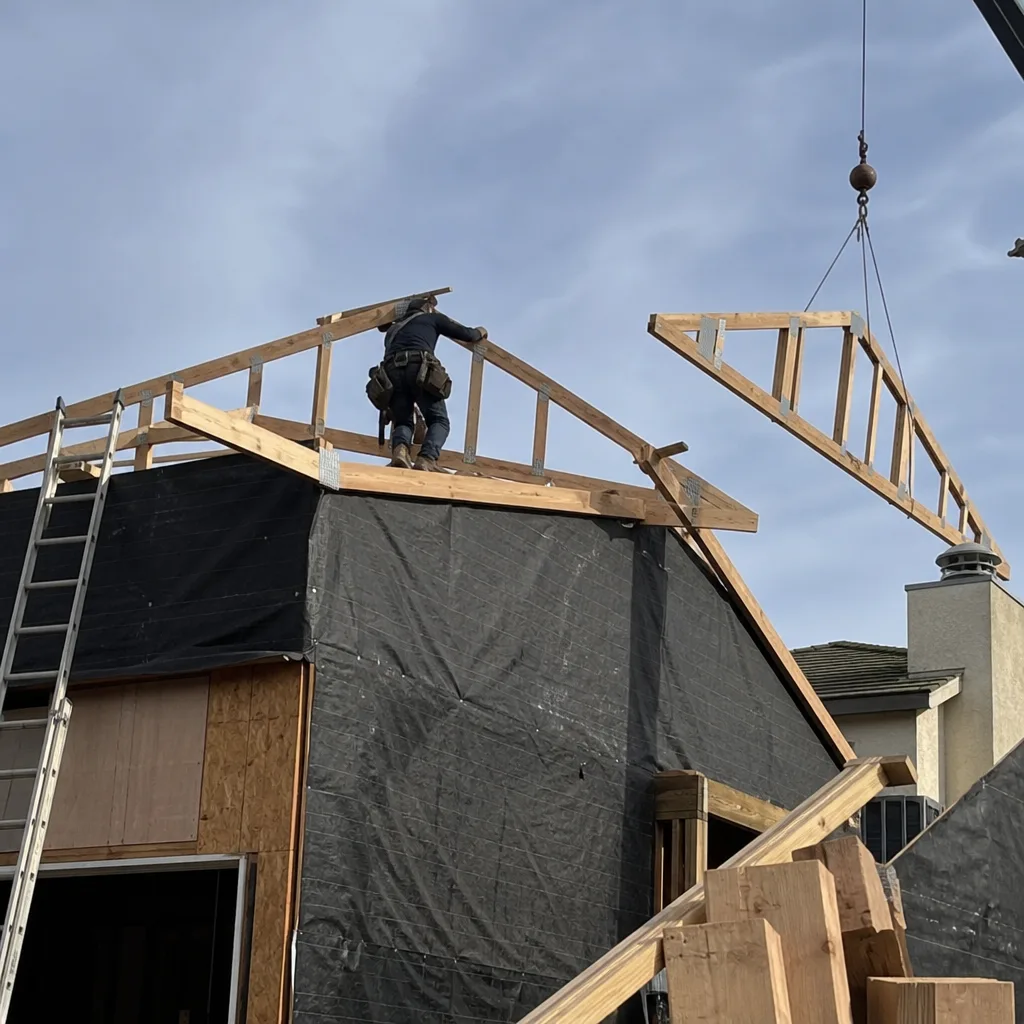
A second story addition contractor in Rolling Hills Estates handles the structural and permit-heavy work of lifting a home from one level to two, on lots where a rear expansion is often blocked by trail easements or horse-keeping setbacks. In this city, going up is frequently the smartest move: it preserves riding areas, works around slope issues, and captures the peninsula views that make Rolling Hills Estates property so valuable. A second-story addition here typically runs $280 to $410 per square foot, driven by full engineering on adobe clay soils and the structural upgrades older single-story ranches need before they can carry a second floor.
Structural Upgrades Before the Walls Go Up
Most single-story ranches from the 1960s and 1970s in Rolling Hills Estates weren’t framed to carry a second level. We reinforce the existing foundation, sister joists where needed, and install engineered shear walls to meet current code. On adobe clay, that means a soils report and often helical piers or deepened footings before the new level is even framed.
Living Through a Second-Story Build
Adding a second story doesn’t mean moving out, but it does mean planning around noise and access. We work in phases, keep the job site clean at the end of every day, and schedule loud work away from nap times and school hours when you tell us your family’s rhythm. You’ll know the schedule a week ahead, not the night before.
Garage Addition Contractors in Rolling Hills Estates
Garage addition contractors in Rolling Hills Estates do a different kind of work than in flat-basin cities, because so many of the detached garages here weren’t built to hold living space. The 1950s-through-1970s ranch homes off Crenshaw Boulevard, Silver Spur Road, and Palos Verdes Drive North have detached two-car garages with undersized footings, cloth-wrapped wiring, and slabs that have crept on the adobe clay for fifty years. Converting or adding onto one typically costs $180 to $320 per square foot, with the spread driven by how much the existing structure needs before it can legally become conditioned space.
What a Garage Addition Actually Requires Here
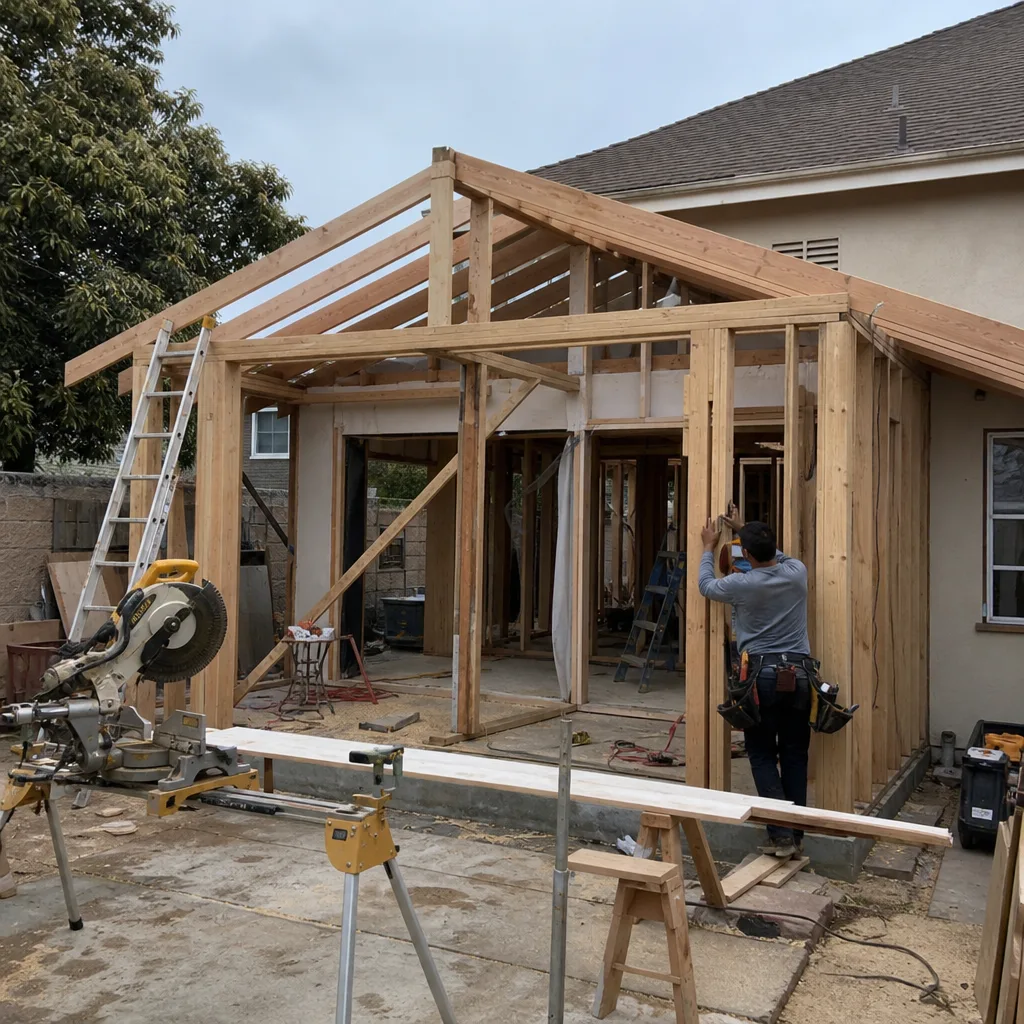
On a late-1960s single-story ranch off Crenshaw Boulevard in Rolling Hills Estates, our tech opened the rear wall for a garage addition and found cloth-wrapped knob-and-tube wiring feeding the original detached garage, plus framing that had been notched for a past water heater swap and adobe-clay soil creep under the existing slab. We stopped, wrote the repair as a line item with photos, and got written approval before touching anything – then set a fully engineered footing per the soils report and tied in James Hardie siding to match the ranch elevation. That’s the difference between a quote that holds and one that falls apart on day three.
Working With the Equestrian Overlay
Many garages in Rolling Hills Estates sit near horse-keeping areas or mapped trail easements. We verify easement locations and setback requirements before we draw a single line, so your addition doesn’t die in first-round permit comments. If the garage pad is clear, the conversion moves forward; if an easement clips it, we adjust the plan before you’ve spent money on engineering.
Trusted Brands We Service in Rolling Hills Estates
Seedling ADU Builders works hands-on with the prefab and panelized brands serious buyers research before calling anyone: Home Addition Contractor projects can use Abodu, Cover, Dvele, or Mighty Buildings systems, and we keep access to local suppliers for James Hardie siding and trim. For Rolling Hills Estates customers, that means you’re not locked into whatever a builder prefers to sell. You choose the product that fits your lot and your budget, and we handle the site work, permits, and finishing.
Common Home Addition Contractor Problems We See in Rolling Hills Estates Homes
- Knob-and-tube wiring behind original walls. Homes built between the late 1950s and 1970s often still carry cloth-wrapped wiring that must be replaced once walls are open. We write a code-upgrade allowance into every contract so this doesn’t become a surprise dispute.
- Trail easements that wipe out the obvious pad. A rear property line that looks empty on the assessor’s map may carry a mapped equestrian trail easement. We verify easements on site before the first sketch, because the city permit tech will flag it in round one.
- Adobe clay soil creep under existing slabs. The Palos Verdes Peninsula’s expansive soils shift measurably with wet-dry cycles. Any new attached addition needs a soils report and often an engineered footing system, which flat-basin projects rarely require.
- Framing that’s been notched and patched for decades. Past water heater swaps, plumbing changes, and amateur repairs leave structural members compromised. We inspect behind the wall, photograph every issue, and price repairs as line items before we proceed.
Pricing for Home Addition Contractor in Rolling Hills Estates, CA
As a benchmark, a bump-out addition in Rolling Hills Estates runs $220 to $310 per square foot. A full room addition runs $250 to $360. A garage addition or conversion runs $180 to $320, depending on what the existing structure needs. A second-story addition runs $280 to $410 per square foot, and a sunroom addition runs $200 to $300 per square foot on an engineered slab. What moves the number most in this city is whether adobe clay soils require deeper footings, whether a trail easement forces a layout change, and what code upgrades a permit triggers once walls are open. Every Rolling Hills Estates project gets a written price before work starts. Call (707) 383-5338 for a free estimate, and we’ll walk the lot with you.
We Also Serve Cities Near Rolling Hills Estates
Seedling ADU Builders serves Home Addition Contractor in Rolling Hills Estates and the surrounding communities. Our crews also work in Los Angeles, Long Beach, Anaheim, and Riverside, bringing the same written-pricing and Care Promise standards to every job.
Serving Rolling Hills Estates, CA - Our Local Coverage Area
We’re based in the Rolling Hills Estates area and know this community well. Use the map below to see our service coverage - if you’re nearby, we can almost certainly help.
FAQs About Home Addition Contractor in Rolling Hills Estates
Because Rolling Hills Estates sits on the Palos Verdes Peninsula’s adobe clay, which shifts measurably with seasonal wet-dry cycles, and because its housing stock is older ranch construction with knob-and-tube wiring and undersized framing. A Torrance addition on flat sedimentary soil rarely needs a soils report for a single-story bump-out; a Rolling Hills Estates addition almost always does. That engineering cost, plus the code upgrades triggered when you open 1960s walls, adds $25 to $60 per square foot compared to flat-basin projects. Call (707) 383-5338 and we’ll walk you through what your specific parcel needs.
Yes, and in Rolling Hills Estates it’s often the most cost-effective path, because the structure already exists and the equestrian overlay grandfathered many of these outbuildings. The catch is that most were never built to code for living space: undersized footings, notched framing, and cloth-wrapped wiring are common. We inspect the structure, price the necessary upgrades as line items, and give you a written number before any work starts. For an exact figure on your barn or garage, call (707) 383-5338.
The Palos Verdes Peninsula’s expansive adobe clay soils expand and contract measurably with wet and dry seasons, and a new slab that isn’t engineered for that movement will crack or creep within a few years. The city’s permit office typically requires a soils report for any new attached addition or detached structure on these soils. That means helical piers or deepened footings in many cases, which adds cost but prevents the slab from failing. We include the soils report in every Rolling Hills Estates estimate so you’re comparing real numbers, not a hopeful guess.
We stop, photograph it, write the repair as a line item with a specific price, and get your written approval before we touch anything. That’s how we handle every surprise on a Rolling Hills Estates project, from knob-and-tube wiring to notched framing to soil creep under an existing slab. The contract includes inspection and code-upgrade allowances from the start, so the surprise becomes a priced, approved change rather than a dispute. You never pay for work you didn’t approve in writing.
We build both, and we’re hands-on with Abodu, Cover, Dvele, and Mighty Buildings systems, so you decide what fits your lot and budget rather than having a builder push you toward whatever he prefers to sell. On Rolling Hills Estates parcels with trail easement or slope constraints, a panelized system can sometimes be a better fit than stick-built, because the modules are set on an engineered foundation without weeks of on-site framing. We’ll show you the tradeoffs in writing before you choose.
Written by Ben Ortega, Owner at Seedling ADU Builders, serving Rolling Hills Estates.