
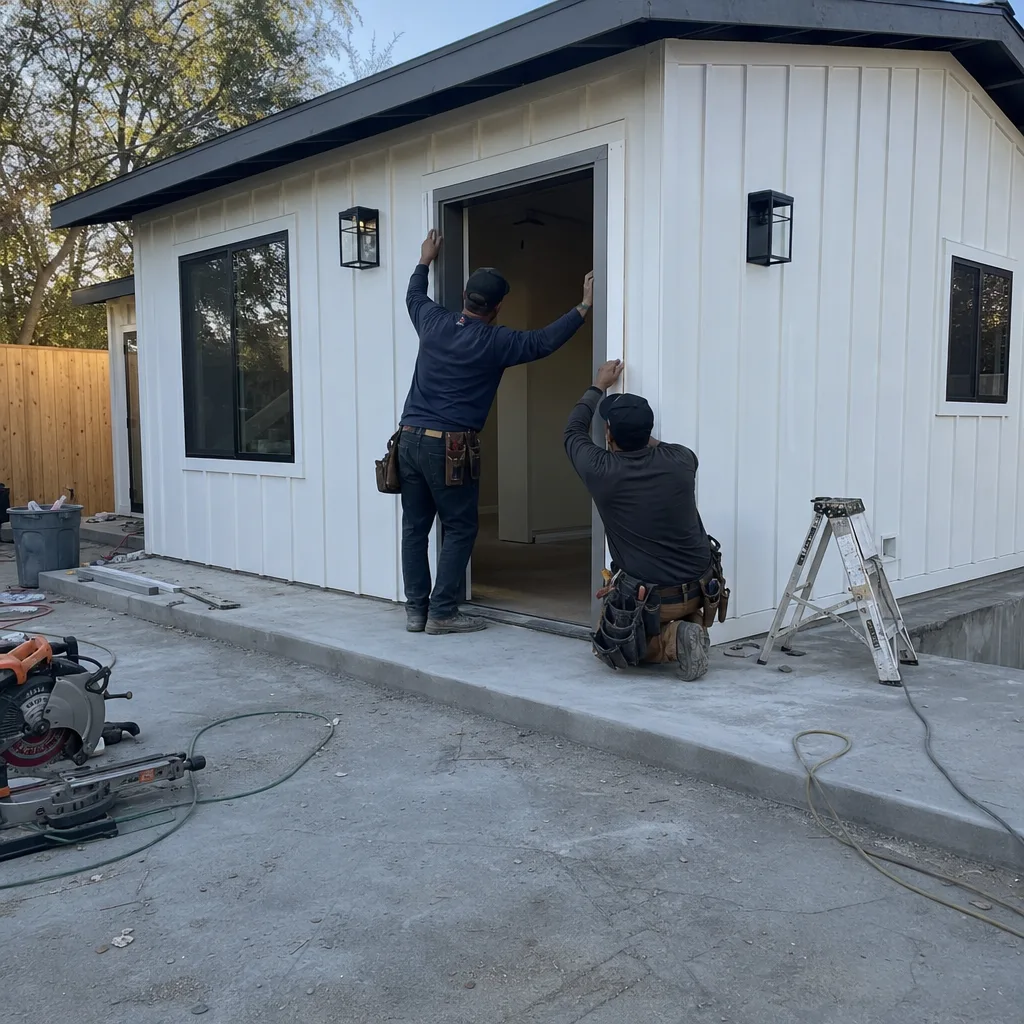
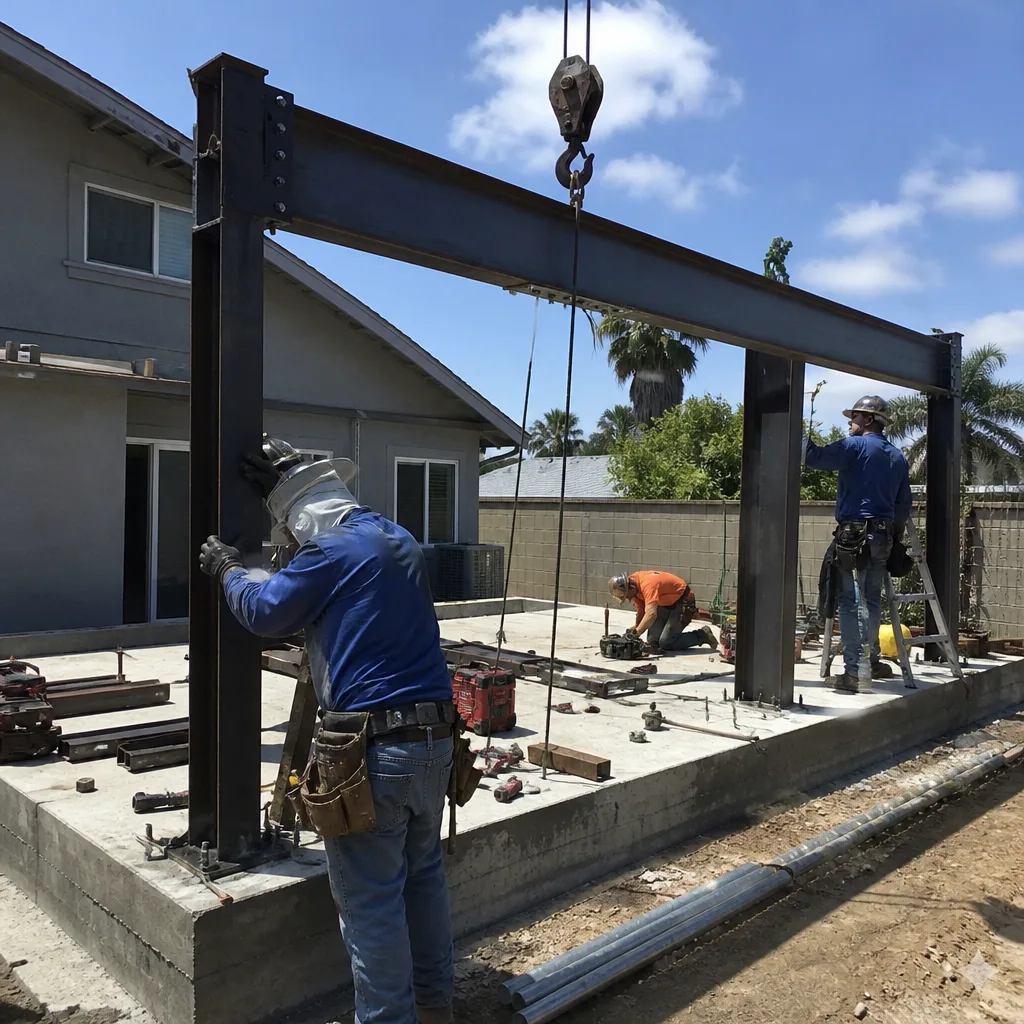
Fast, Reliable ADU Builders Across Palm Desert
Adding an accessory dwelling unit in Palm Desert means navigating two approval tracks at once: City of Palm Desert building permits and HOA architectural review from communities like Sun City Palm Desert or Monterey Country Club. We handle both tracks as one process, so you’re not stuck translating between a city inspector and a resort board. Our crews work throughout Palm Desert, from gated golf communities off Portola Avenue to mid-century ranch neighborhoods along Highway 111. If you’re weighing a detached ADU, casita conversion, or garage conversion, call (707) 383-5338 to get a written price before any work starts.
Key Takeaways
- Palm Desert ADUs require dual approval: City permits plus HOA architectural review in most resort communities.
- Climate Zone 15 thermal code is the hottest in California; expect higher insulation R-values and oversized HVAC on any ADU here.
- Detached casitas built in the 1980s and 1990s often fail current inspection standards and need gut-level upgrades, not cosmetic fixes.
- Every project gets a written price before work begins, backed by the 365-Day Done Right Promise.
- Crews wear shoe covers and lay drop cloths inside your home, and you get a clean-up photo before they leave.
Why Seedling ADU Builders Is Palm Desert’s Preferred ADU Builders Company
Palm Desert homeowners tell us the same thing: they want an ADU without construction chaos spilling into the house. That’s why every Seedling crew follows the Cedarwell Care Promise. Shoe covers go on before anyone steps inside. Drop cloths protect the floors along the path to the work area. Where there’s a pet-safe product alternative, we use it. And before the crew leaves each day, you get a photo of the clean-up. Ben Ortega, who leads our team, holds every job to that standard, in writing.
We know what Palm Desert’s housing stock actually looks like. Single-story stucco homes built between the late 1970s and early 2000s. Casitas with uninsulated walls and undersized sub-panels. Large desert lots where grading and drainage matter more than most contractors admit. Palm Desert isn’t a place you can quote from a satellite photo. Our ADU Builders team scopes every site in person before pricing, so the number you see on paper is the number you pay.
ADU Contractor in Palm Desert
An ADU Contractor in Palm Desert does more than frame walls and pull wire. The job starts with the dual-track approval: City of Palm Desert plan review for building, energy, and life-safety code, plus the HOA architectural review board in communities like Sun City Palm Desert, Monterey Country Club, or the gated enclaves along Country Club Drive. We run both tracks concurrently and keep you updated at each step, because a stalled HOA review can add months to a project that would sail through the city alone.
Site Scoping Before Any Quote
For detached ADUs on larger Palm Desert lots, we walk the site before quoting. That means checking equipment access routes, existing utility locations, and how water moves across the property during monsoon-season downpours. A grading mistake on an open desert lot doesn’t show up until the first heavy rain pools against your new foundation. We’d rather catch it with a site visit than with a change order.
Dual-Track Permitting Handled In House
We prepare submittals for both the city and the HOA, and we track them through approval. Palm Desert resort communities have their own design-review calendars and aesthetic standards, and we’ve learned how to time submittals so neither track holds the other up. The city cares about Code. The HOA cares about exterior finish, roofline, and setback aesthetics. We speak both languages.
ADU Design in Palm Desert
ADU Design in Palm Desert has to answer for the sun first and the HOA second. A detached ADU with an unshaded west-facing wall in Climate Zone 15 can become functionally uninhabitable by mid-afternoon from June through September. Low solar-heat-gain glazing, high R-value wall assemblies, and cool-roof coatings aren’t upgrades here; they’re minimums if the unit is going to stay comfortable without running the AC at full draw all day.
Thermal Envelope First
We design Palm Desert ADUs around the thermal envelope, not the floor plan. That means sizing insulation and glazing for 110-degree summers before we finalize interiors. A well-detailed envelope lets you run a smaller HVAC system, which costs less to install and less to operate every month. On a 600-square-foot detached ADU, that can mean real savings over the life of the unit.
Designing for the HOA Review
In a gated Palm Desert community, the HOA board will review your ADU’s exterior before the city even looks at your energy calcs. We design for both from the first sketch: rooflines and finishes that pass architectural review, and wall assemblies and glazing that pass Title 24 in Climate Zone 15. You shouldn’t have to choose between a design the board approves and a unit you can actually live in.
Trusted Brands We Service in Palm Desert
We work directly with Abodu, Cover, and Dvele, three brands serious ADU buyers in Palm Desert research before calling anyone. If you’ve already looked at prefab or panelized options, we can install the unit and handle the Palm Desert-specific site work: foundation on desert soils, utility connections, grading, and the city plus HOA approval package. James Hardie fiber-cement siding is our standard exterior on custom detached ADUs here, because it holds up to extreme heat without warping or fading. You’re never locked into one manufacturer’s catalog; we fit the product to your lot, not the other way around.

Common ADU Builders Problems We See in Palm Desert Homes
- 1980s casitas treated as cosmetic conversions. A casita in Palm Desert built as a vacation guest room often has uninsulated walls, a 60-amp sub-panel, and no slab moisture barrier. It fails Climate Zone 15 inspection and turns into a gut renovation.
- HOA architectural review surprises. Homeowners assume state ADU law alone is enough, then stall when the Sun City Palm Desert or Monterey Country Club design board wants revisions. The dual-track process is the rule here, not the exception.
- Undersized electrical panels. Most 1980s-era Palm Desert casitas were wired for a mini-fridge and a ceiling fan, not a permitted dwelling unit with a kitchen and laundry. Upsizing to a 200-amp sub-panel happens on the majority of casita conversions we scope.
- Flat-roof cool-coating conflicts. Mid-century and castia flat roofs in Palm Desert must meet cool-roof standards under Title 24. Homeowners sometimes reroof first, then discover the coating they chose doesn’t satisfy the code requirement, and pay twice.
Pricing for ADU Builders in Palm Desert, CA
In Palm Desert, a new detached ADU typically runs $280,000 to $420,000, depending on size, site access, and how much site work the lot needs. A prefab or panelized ADU from Abodu, Cover, or Dvele usually lands between $180,000 and $290,000 installed, including the Palm Desert site package. A casita conversion starts around $125,000 for a true cosmetic-level job, but most Palm Desert casitas need $200,000 to $300,000 of shell, insulation, electrical, and slab work to pass inspection. What changes the price here: dual-track permitting scope, whether your casita needs a full thermal envelope rebuild, and grading or drainage work on open desert lots. We give you a written, line-item price before any work begins. Call (707) 383-5338 to schedule a free scoping visit.
We Also Serve Cities Near Palm Desert
Seedling ADU Builders serves homeowners throughout the Coachella Valley, including Palm Desert, Thousand Palms, Rancho Mirage, La Quinta, and Indio. If your home sits in a neighboring city with a simpler single-track permit process, that still falls within our service area. Scheduling is coordinated from our Inland Empire office, and crews work locally in Palm Desert and the surrounding valley.
Serving Palm Desert, CA - Our Local Coverage Area
We’re based in the Palm Desert area and know this community well. Use the map below to see our service coverage - if you’re nearby, we can almost certainly help.
FAQs About ADU Builders in Palm Desert
Yes. California’s post-2020 ADU statutes explicitly strip HOAs of the power to prohibit ADUs, so the CC&R language that banned them is no longer enforceable. What remains is the HOA’s architectural review step, which can still set rules about exterior appearance, rooflines, and construction hours. We handle both the city permit and the HOA review as one coordinated process, so the board gets a compliant submittal and your project keeps moving. Call (707) 383-5338 for a scoping visit.
A Palm Desert casita conversion costs more because most casitas built in the 1980s and 1990s were never insulated or wired to permanent-occupancy standards. Under Climate Zone 15, the city requires high R-value wall insulation, low-solar-heat-gain glazing, a sub-panel sized for kitchen and laundry loads, and a slab moisture barrier. A casita missing those elements becomes a near-complete gut renovation before a certificate of occupancy is possible. We scope all of this during the free site visit, before you commit to a price.
Climate Zone 15 is the hottest residential zone in California, so a Palm Desert ADU needs the highest insulation R-values in the state, low-SHG or spectrally selective glazing, and HVAC equipment sized larger than a comparable coastal unit. Flat or low-slope roofs must also meet cool-roof requirements. We design the thermal envelope first, then size the HVAC to the envelope, which keeps the unit comfortable and the monthly energy bill lower. Call (707) 383-5338 to talk through what your specific lot requires.
Yes, we run both approval tracks as one coordinated scope of work. The City of Palm Desert reviews for building, energy, and life-safety code, while the HOA reviews exterior design, finishes, and community standards. We prepare both submittals, track both calendars, and keep you informed at each approval milestone. A dual-track process is standard in Palm Desert’s resort communities, and we’ve built our process around it.
On larger open lots outside the gated cores, septic, well, and utility setbacks can drive the ADU’s placement and price. A septic leach field has mandatory clearance distances from any new structure, and a private well may need testing or treatment before the ADU can share it. Electrical service may need upgrading at the meter. We scope all of this during the free site visit, because quoting before knowing where the leach field sits or where the meter panel lives produces a number that won’t survive construction. Call (707) 383-5338 and we’ll walk your lot.
One More Thing About Building in Palm Desert
We met a homeowner along the Highway 111 corridor whose 1980s detached casita looked fine from the outside. It failed City of Palm Desert inspection on three fronts: missing wall insulation, a 60-amp sub-panel, and no slab moisture barrier. We gutted and rebuilt the shell with James Hardie fiber-cement siding and low-SHG glazing, upsized to a 200-amp sub-panel, and added cool-roof coating. The unit passed and became a permitted ADU. That’s the work this city actually requires, and we’d rather tell you on day one than surprise you at inspection.
If you’re ready to get a written price for your Palm Desert ADU, call (707) 383-5338. We’ll schedule a free site visit, walk the property with you, and put everything in writing before any tools come out of the truck.
Written by Ben Ortega, Owner at Seedling ADU Builders, serving Palm Desert and the Coachella Valley.