
Fast, Reliable ADU Builders Across Fillmore
Adding a detached ADU on a Fillmore acreage lot usually means navigating two sets of rules at once: City of Fillmore building standards and Ventura County requirements for septic, wells, and setbacks. That dual path shapes nearly every price and timeline you’ll see, and it’s exactly what our ADU Builders team plans for before a single quote is written. If your property sits below the San Cayetano Fault, you’ll also likely need an Alquist-Priolo geotechnical review before any habitable structure can be permitted. We scope those steps up front so your written price reflects the real project, not a best-case guess. Call (707) 383-5338 and we’ll walk the lot with you.
Why Seedling ADU Builders Is Fillmore’s Preferred ADU Builders Company
Fillmore homeowners keep coming back to us for one reason: we write down what the project will cost before anyone picks up a tool, and we stand behind the finished ADU with the 365-Day Done Right Promise. If something isn’t done right, we make it right, in writing. Our crews arrive in uniform, background-checked, and wearing shoe covers before they step inside your home. On acreage projects, that promise extends to the land too: we protect access roads, flag existing septic lines, and keep the build pad clean at the end of every day.
We know the difference between a city lot on Central Avenue and a two-acre citrus parcel off Guiberson Road. That matters when you’re planning a detached ADU and the question isn’t just “what will it cost” but “which agency approves the septic.” Ben Ortega, who leads our team, reviews every Fillmore quote personally before it goes out. He’s walked enough of these parcels to know when a geotechnical report will be required and when a sewer lateral inspection will save you weeks later.
Our customers in Fillmore appreciate that a live person answers our phone 24/7 during an active build. You won’t reach a voicemail tree when you call about a question on your permit status or foundation pour.
ADU Contractor in Fillmore
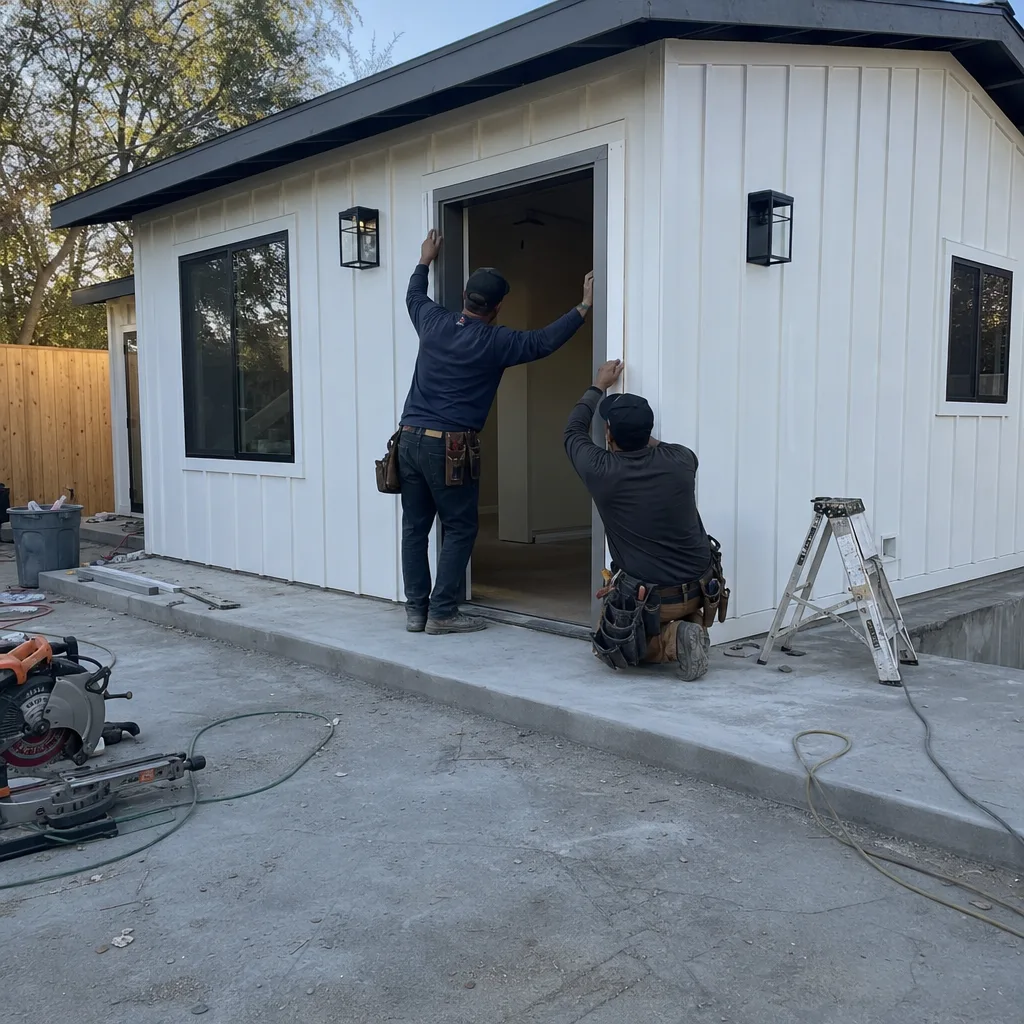
An ADU Contractor in Fillmore does more than frame walls and pull wire. On acreage here, the contractor is the person who sequences the geotechnical review, the septic or sewer confirmation, the grading plan, and the permit filings so none of them stall the others. We act as that single point of contact from first site walk to final inspection, and we’re comfortable working with Ventura County’s building department when your parcel falls outside city jurisdiction.
Detached ADUs on Acreage
Most Fillmore acreage ADUs we build are detached units between 500 and 1,000 square feet. A typical detached ADU in Fillmore runs $180,000 to $340,000 depending on foundation type, septic system scope, and finish level. On a lot that needs a new or expanded septic field, add $15,000 to $35,000 before any vertical construction begins.
Garage Conversions vs. New Construction
Working with a Garage Conversion Contractor - Fillmore changes the math. If the garage slab and framing are sound, a conversion in Fillmore typically runs $120,000 to $200,000. But older citrus-era garages often have undersized footings and no vapor barrier, which pushes the structural work closer to new construction. We’ll tell you which path makes sense after one site visit.
ADU Design in Fillmore
ADU Design in Fillmore starts with what the lot will actually allow. That means checking fault-zone requirements, septic reserve areas, well setbacks, and fire-resistant exterior requirements before the first sketch. Our design team works directly with brands like Dvele and Cover when a prefab route fits, or with local drafters when a custom plan is the better call for an odd-shaped citrus lot.
Designing for Santa Clara River Valley Conditions
Fillmore’s summers run hot and the Santa Anas come through hard in the fall. We design ADUs here with ventilated attics, conditioned crawlspaces, and exterior finishes that meet fire-exposure standards for lots backing up to chaparral. That often means James Hardie lap siding and Class A roof assemblies, choices baked into the plan rather than added as a change order later.
Foundation Design on Fault-Adjacent Parcels
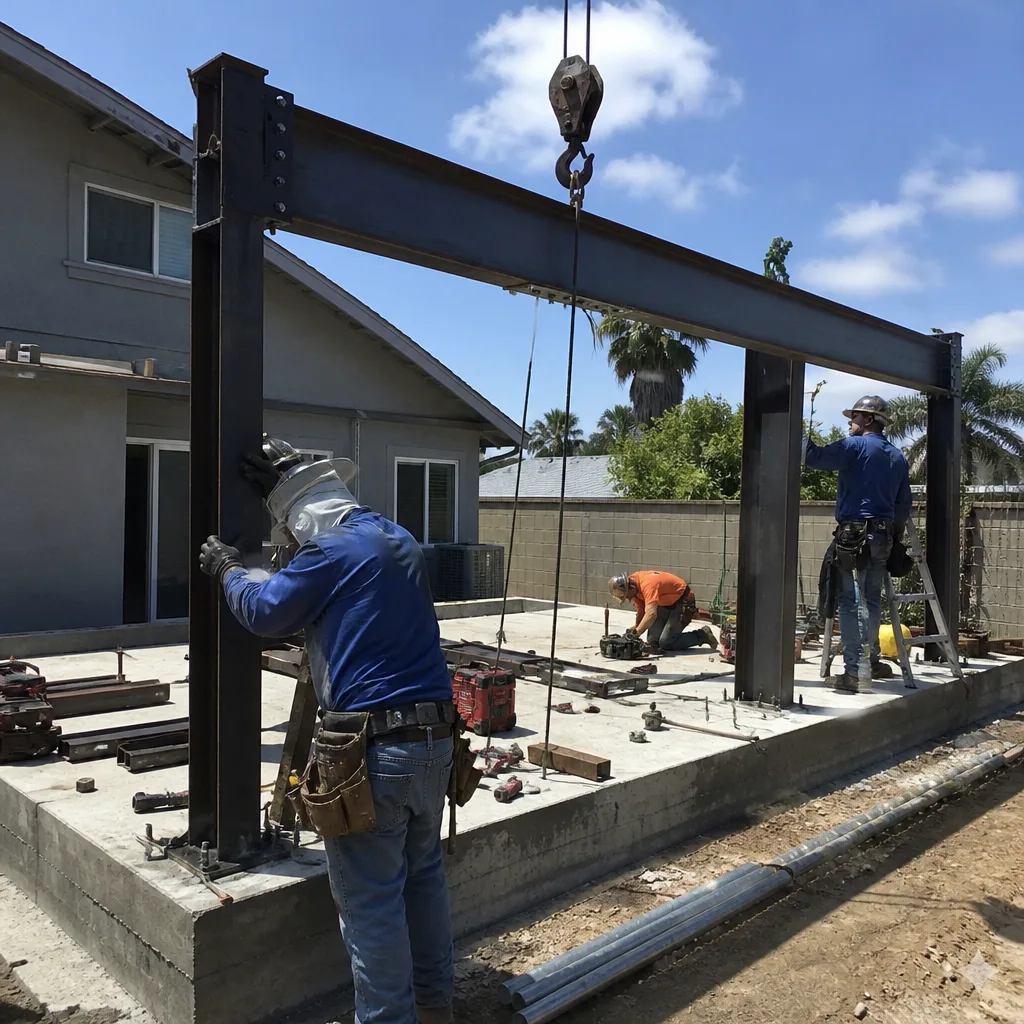
If the Alquist-Priolo review flags your parcel, the foundation design changes: deeper footings, reinforced stem walls, or a post-tensioned slab. That’s not a surprise we want a homeowner to discover mid-permit. We run the geo review early and price the foundation accordingly, so the written quote you get is the number you build to.

Trusted Brands We Service in Fillmore
We’re hands-on with the prefab systems Fillmore homeowners research most: Dvele, Cover, and Boxabl. Each has different lead times, foundation requirements, and finish levels, and we help you sort which one fits your parcel’s constraints and your family’s timeline. If you’re leaning custom instead, we use James Hardie siding and trim on nearly every Fillmore build for its fire resistance and how it holds up through valley heat cycles. Stocking and ordering are coordinated from our Los Angeles office, which means shorter material delays for Fillmore projects than ordering piecemeal.
Common ADU Builders Problems We See in Fillmore Homes
- Alquist-Priolo geotechnical surprises: Parcels below the San Cayetano Fault often require a geo review that flags the foundation after the initial quote is written. We run that review before quoting so your price already includes the redesigned footing or setback.
- Septic and well conflicts: Many Fillmore acreage lots fall outside city sewer service. A new ADU means checking the existing septic field’s capacity and the well’s setback requirements, both of which need separate engineering and permitting.
- Access road limitations: Long unpaved driveways off Guiberson Road or Telegraph Road can’t always support a concrete truck. We budget for grading, gravel stabilization, and smaller equipment where needed, so material delivery doesn’t stall the framing crew.
- Undersized electrical panels in older homes: Homes built between the 1920s and 1960s in Fillmore often carry 60-amp panels with galvanized stubs. A new ADU usually requires a service upgrade and a new lateral run, which we scope during the design phase, not after demolition starts.
Pricing for ADU Builders in Fillmore, CA
Here’s what we tell Fillmore families before they commit. A garage conversion in the city proper typically runs $120,000 to $200,000. A detached ADU on a standard Fillmore lot runs $180,000 to $300,000. On acreage with septic expansion and geotechnical work, expect $220,000 to $340,000. The spread comes from foundation design, septic scope, access grading, and finish choices. Every quote we write is a fixed written price, not an estimate that drifts upward. No change orders for work we should have seen coming. Call (707) 383-5338 and we’ll walk your parcel and give you the real number.
We Also Serve Cities Near Fillmore
Our crews work across the Santa Clara River Valley and into the Conejo Valley. We serve Moorpark, Santa Paula, Somis, and Simi Valley with the same written pricing and 365-Day Done Right Promise we bring to every Fillmore project, so ADU Builders in Fillmore can refer family across the county line without a drop in the standard of care.
Serving Fillmore, CA - Our Local Coverage Area
We’re based in the Fillmore area and know this community well. Use the map below to see our service coverage - if you’re nearby, we can almost certainly help.
FAQs About ADU Builders in Fillmore
It depends on where your parcel sits. Properties inside Fillmore city limits go through the City of Fillmore Planning and Building departments. Properties in unincorporated county pockets around Fillmore, including many of the citrus-era acreage lots off Guiberson Road and along the foothills, go through Ventura County’s building and environmental health divisions. Our team files with whichever agency has jurisdiction over your parcel, and we manage that process for you from the first submittal. Call (707) 383-5338 if you’re not sure which agency applies to your lot.
If your parcel is within an Alquist-Priolo fault zone, likely yes. Fillmore sits directly below the San Cayetano Fault, and many parcels between the historic downtown and the foothills fall inside the review boundary. The review triggers a geotechnical investigation that shapes foundation design, and we run it before quoting so the price you see is the price you build to. We’ve completed these reviews on multiple Fillmore parcels and can walk you through exactly what they require.
In most cases, yes. Citrus-era lots are often wider and deeper than modern subdivisions, which gives you room for a detached ADU with proper setbacks. The condition that changes feasibility is usually septic capacity or fault-zone foundation requirements, not lot size. We’ll confirm what your specific parcel can support during the first site visit and give you a written price that reflects those constraints.
Because older Fillmore lots were subdivided when one home per parcel was the norm. City sewer laterals near the historic downtown were often sized for a single dwelling, and acreage parcels outside city service rely on septic systems built decades ago for smaller households. Both conditions require inspection and often expansion before an ADU can connect. We schedule lateral camera inspections and septic capacity checks early so they don’t stall your permit.
Yes, and it affects both comfort and fire safety. The Santa Clara River Valley’s summer heat demands real insulation, ventilated roof assemblies, and conditioned crawlspaces. Fall Santa Ana winds mean exterior materials need to meet fire-exposure standards on lots near chaparral. We specify James Hardie siding and Class A roof assemblies on Fillmore builds as standard, not as upgrades. That keeps the ADU comfortable in August and defensible in October.
Ready to see what your Fillmore parcel can support? We’ll walk the lot, check the septic or sewer path, confirm whether a geotechnical review applies, and hand you a written price. Call (707) 383-5338 to schedule your free estimate.
Written by Ben Ortega, Owner at Seedling ADU Builders, serving Fillmore and the Santa Clara River Valley.