
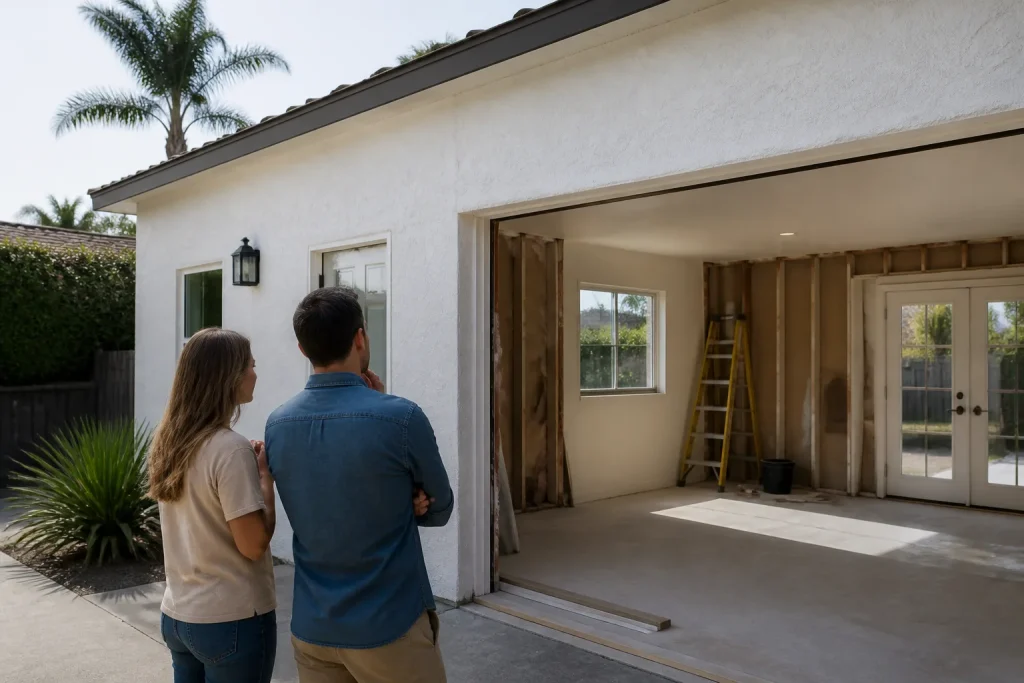
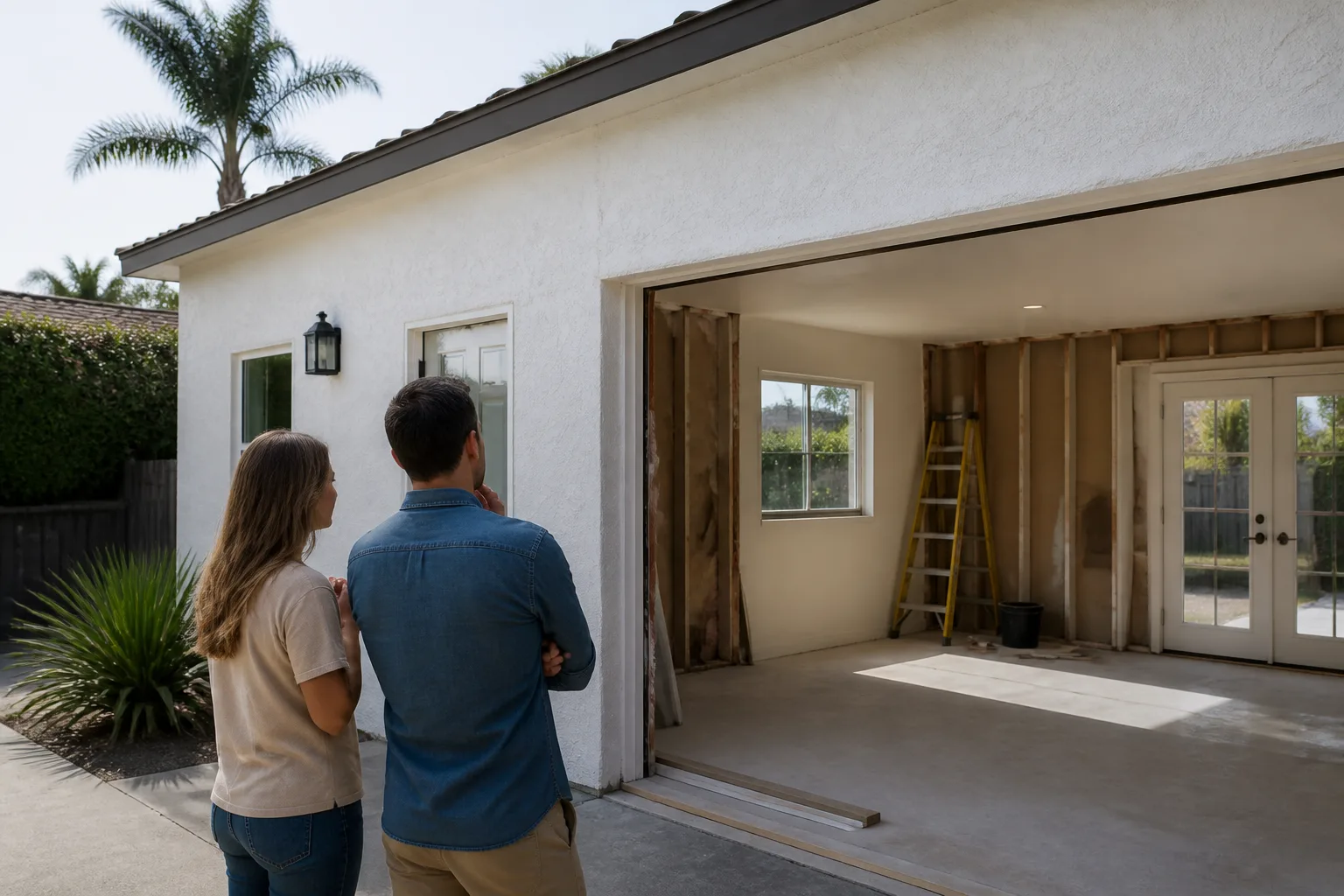
Garage Conversion Contractor: Repair or Replace? How Los Angeles Homeowners Decide
In Los Angeles, most garages are worth more converted than they ever were as storage. The repair-or-replace question usually comes down to five structural checks, and the answer isn’t found in a quote alone. If the foundation, framing, and ceiling height pass, repairing a garage and converting it to an ADU almost always beats tearing it down. If you’d rather have a professional tell you which path makes sense for your specific garage, call (707) 383-5338 for a free estimate.
We’ve walked through this decision with hundreds of Los Angeles homeowners, and the conversation rarely starts where people expect. They call asking about roof repairs or cracked slabs. The conversation ends with rental income projections and a permit path they didn’t know existed.
The Los Angeles Difference: Why a Garage Here Is Not a Garage in Phoenix
In most American cities, a 400-square-foot detached garage from 1952 is a liability. In Los Angeles, it may be the least expensive path to a legal, rentable ADU you’ll ever have access to, if the structure qualifies. That’s not sales talk. It’s baked into the city’s ADU ordinance.
Here’s what makes Los Angeles different. Since 2017, state law and the city’s own rules have removed the two barriers that used to kill garage conversions: parking replacement and bureaucratic permitting. If you convert an existing garage to an ADU, Los Angeles generally does not require you to add a new parking space off-street. The state law that changed this, SB 1069, matters because a new parking space in Los Angeles can cost $15,000 to $30,000 to build. That’s cost avoidance, not a discount.
Permitting also moved to a ministerial review process. The city can’t impose discretionary design review on an ADU that meets objective standards. In practice, a garage conversion that would have taken 18 months and multiple public hearings in 2012 now moves in a fraction of the time.
And the construction math leans hard in the conversion’s favor. A garage conversion typically costs $180 to $320 per square foot in Los Angeles, depending on finish level and utility work. New detached construction starts around $350 and climbs past $450. On a 400-square-foot project, that’s a $50,000 to $90,000 difference. The existing structure carries real value, even when it needs work.
- No replacement parking required for garage conversions under state ADU law.
- Ministerial permit review removes discretionary delays.
- $180 – $320 per square foot for conversion versus $350 – $450+ for new construction.
- Existing slab, roof, and walls are retained, cutting materials and framing costs.
We’re ADU Builders in Los Angeles, and we see the same pattern on nearly every consultation: the homeowner has been told by a neighbor or an old contractor that their garage is too far gone. Then we inspect it. Often, it’s not. Sometimes, it is. The inspection is what tells you which.
The Five Structural Conditions That Decide Repair vs. Replace
Most contractors don’t inspect these before bidding. They assume conversion and price accordingly, or they assume replacement and price accordingly. The result is a quote that answers the wrong question. Here’s what a real evaluation looks like, and what we check on every garage conversion walkthrough in Los Angeles.
1. Foundation Type and Condition
Pre-1960 Los Angeles garages often sit on unreinforced concrete slabs or minimal perimeter footings. Hairline cracks at the slab are usually cosmetic and fine. But if the slab has settled more than an inch, or the perimeter is crumbling, you’re looking at foundation work. A new foundation under a converted ADU can cost $15,000 to $40,000 depending on size and access. At that point, replacement starts to make financial sense, because you’re already paying for the most expensive part of a new build.
2. Framing and Roof Structure
Termite damage and dry rot show up in Los Angeles garages that sat adjacent to sprinklers or ivy for decades. We check the sill plates, rafters, and header connections. If we find damage concentrated within 20% of the framing, repair is usually straightforward. Damage across 40% or more means replacing the roof or reframing sections. Get that number in writing from whoever inspects. Vague language from a contractor here is a red flag.
3. Ceiling Height
State ADU law requires a minimum ceiling height of 7 feet, and 7 feet 6 inches in some areas. Many 1950s Los Angeles garages run 7 feet 8 inches to 8 feet, which clears easily. But if the garage was built with a low roof line or the slab settled, you may be under the legal minimum. Raising a roof is structural work, often $25,000 to $50,000 on a two-car garage. This single measurement can flip a conversion into a replacement.
4. Utility Proximity
A garage conversion needs power, water, sewer or a legal alternative, and sometimes gas. If the garage already has a subpanel and water nearby, the conversion is straightforward. If sewer is 60 feet away across a concrete driveway, trenching costs jump. In Los Angeles, sewer line work in an ADU conversion usually runs $8,000 to $25,000 depending on depth and distance. This is a line-item that separates accurate bids from guesses.
5. Setback Compliance
If the garage sits within 4 feet of a side or rear property line, state law says the ADU can generally stay there as long as you’re converting the existing structure. A replacement structure must meet current setback rules, which in Los Angeles typically require 4 feet from the side and 5 feet from the rear, with variations by zone. If your existing garage is already set back 2 feet from the property line, you can keep that footprint in most conversion scenarios. The same footprint is often not buildable as new construction. This is one of the most common reasons we tell homeowners to repair rather than replace.
We pulled plans for a garage up in Highland Park last month where the structure sat 18 inches from the side lot line. A new build at that location would have been impossible under current codes. The conversion sailed through. The homeowner would have thrown away a buildable lot position by demolishing.
When Replacement Is the Better Financial Decision
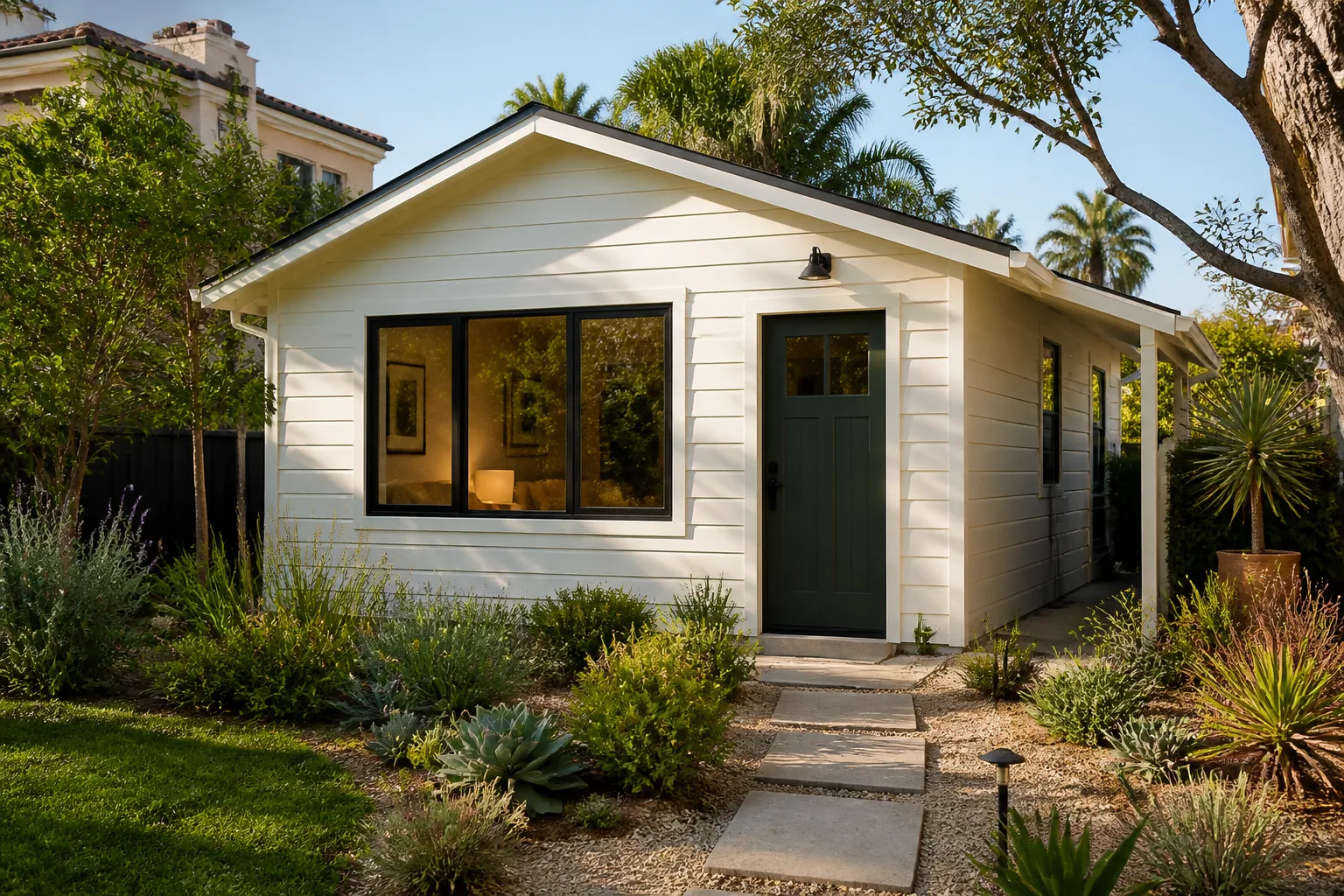
We’re not going to tell you every garage is worth saving. Some aren’t. The difference is knowing the line. In Los Angeles, the repair-or-replace decision should be driven by the cost to bring the existing structure up to legal ADU standards, compared against the cost to build new. Here’s when replacement wins.
Active foundation failure. If the slab has dropped more than two inches, or if you can see separated framing at the corners, this is not a repair project. Underpinning a failed foundation can cost as much as a new slab while leaving you with remaining uncertainty. At that point, you’re paying new-foundation money and still working within old constraints.
Substandard framing throughout. When termite tunnels run through 60% of the joists and rafters, you’re not repairing a garage. You’re rebuilding one piece by piece. The labor cost of piecemeal reframing exceeds the cost of clean demolition and new framing, which in Los Angeles runs $10 to $18 per square foot for demo and disposal, plus $18 to $30 per square foot for new framing.
Sewer access that makes no sense. An ADU needs a legal path to sewer. In rare Los Angeles lots where the main line sits 80 or more feet away across bedrock or a reinforced driveway, the trenching alone can exceed $30,000. If the garage also needs foundation work, replacement can be less expensive than trying to save a structure that fights you at every step.
Non-compliant setbacks on a lot where a new footprint is legal. If the garage sits well inside setbacks and the lot has room for a new structure in a better position, replacement opens options that conversion can’t. You can build wider, higher, and with better solar orientation.
Apples to Apples: What Each Bid Must Include
The most common mistake we see isn’t choosing wrong. It’s comparing two bids that measure different things. A conversion bid that excludes utility work looks $40,000 cheaper than a replacement bid that includes it. Here’s what a meaningful comparison requires on both sides.
A conversion bid should include: demolition of non-structural interior elements, floor and wall insulation to meet Title 24, drywall and finish work, plumbing and electrical upgrades including any panel work, and the city permit fees, which for Los Angeles ADU projects typically run $5,000 to $12,000 depending on scope and school district fees.
A replacement bid should include: demolition and disposal of the existing structure, new foundation, new framing, roof, insulation, utility trenching from the main lines, finish work, and the same permit costs.
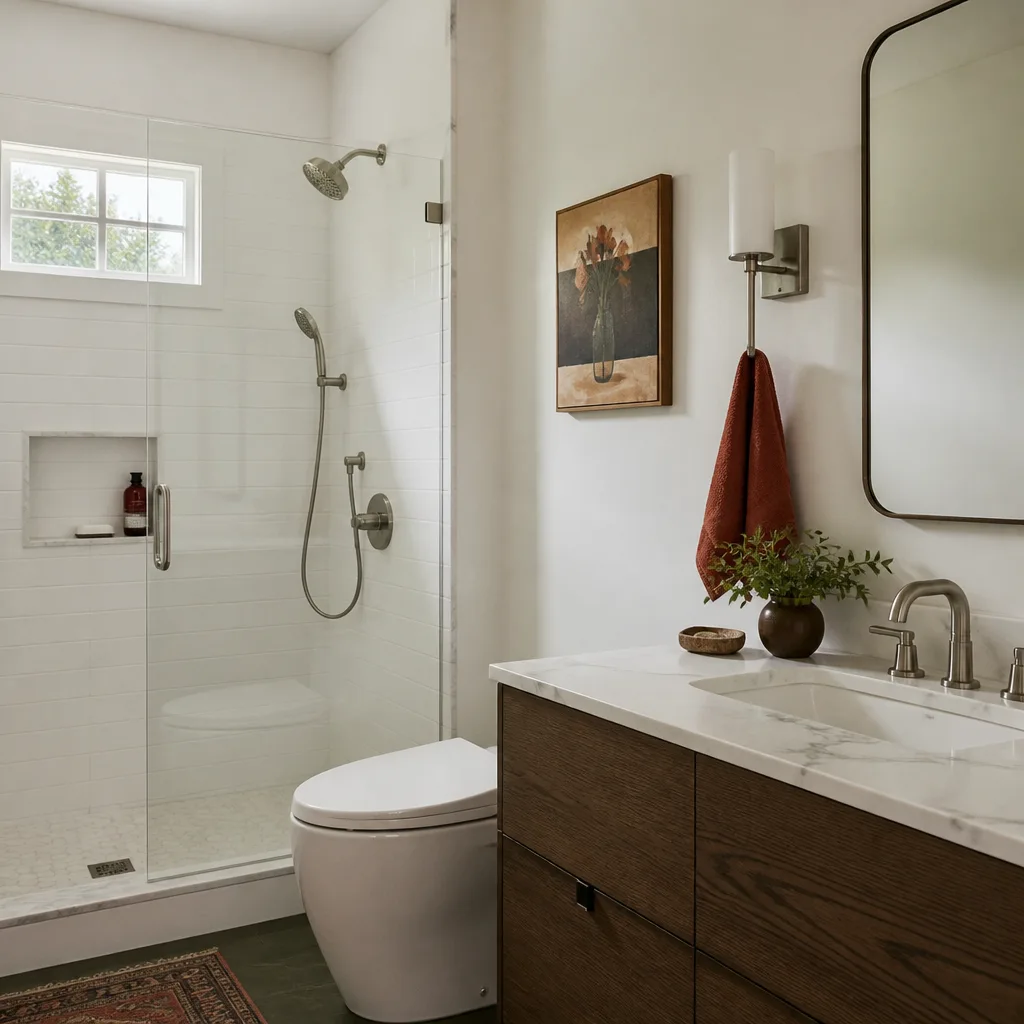
What surprises homeowners most is the finish-work line. Both paths end in the same place: a kitchenette, a bathroom, flooring, paint. That work costs the same either way, roughly $80 to $140 per square foot for a modest but durable ADU finish level. The difference is everything that happens before the drywall goes up. That’s why the repair-or-replace conversation should focus on the shell: foundation, framing, roof, utilities. The finishes are a constant.
At Seedling ADU Builders, every bid we write includes a written price before any work begins, with no surprise line items added after crews arrive. If you’re comparing quotes, ask each contractor to explicitly list which costs are included and which are excluded. Then compare the same scope. It’s the only way the numbers mean anything. We do this for every Garage Conversion Contractor in Los Angeles inquiry, because it’s the only honest way to answer the question.
The Income Math: Finding Your Break-Even Point in LA
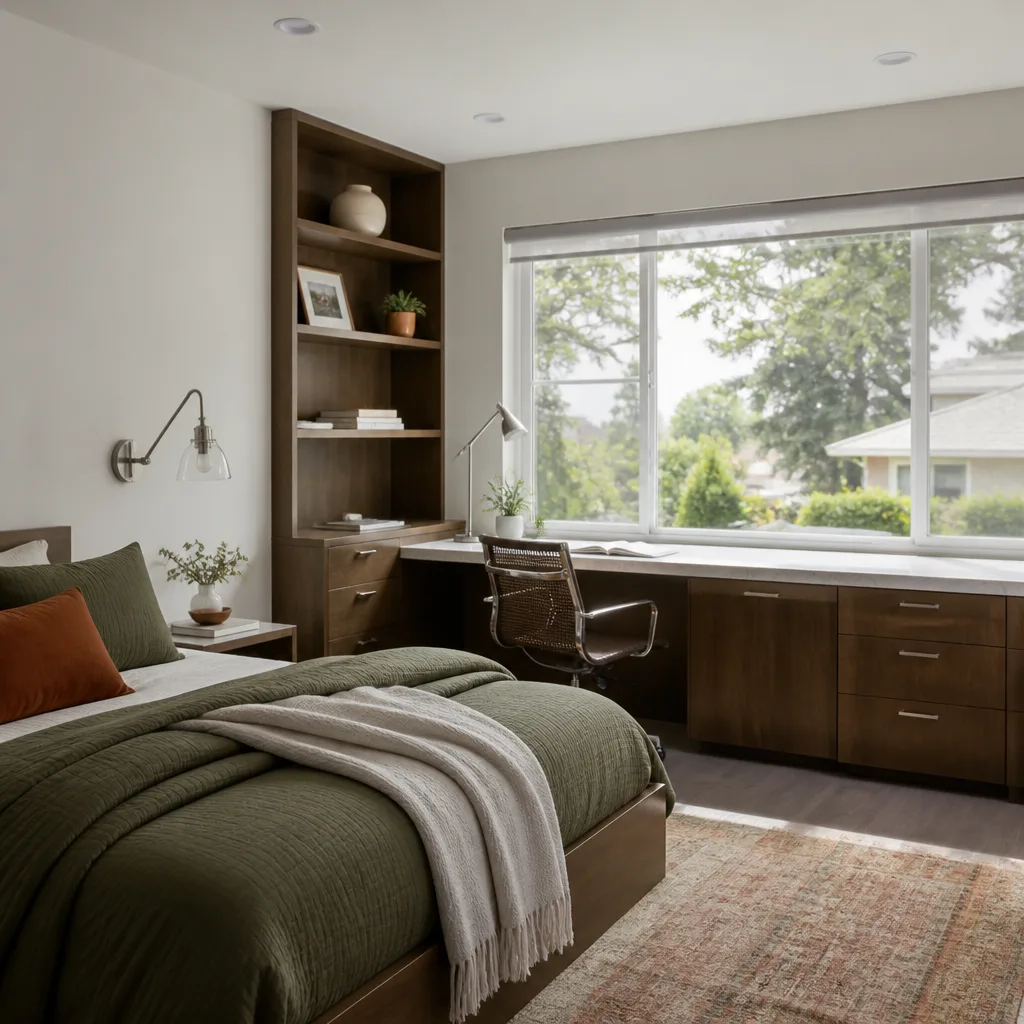
Repair-or-replace is a financial question, and rent is the other side of the equation. In Los Angeles, a converted garage ADU rents for $1,800 to $3,200 per month depending on neighborhood, size, and finish level. The difference matters more than the construction cost alone, because it determines how long either investment takes to earn its money back.
Here’s a simple way to run the math for your lot. Take the all-in cost for conversion, divide by the monthly rent you can realistically command, and divide by 12. That’s your payback period in years. For example, a $140,000 conversion renting for $2,200 per month pays back its construction cost in about 5.3 years on rent alone, not counting the increase in property value. A $210,000 replacement renting for the same amount takes 8 years. If the conversion adds $150,000 to the property’s resale value and the replacement adds $180,000, the conversion often wins on total return.
But run the numbers with your neighborhood’s actual rents. A studio ADU in Van Nuys rents very differently than one in Culver City. Check current listings for comparable ADUs within two miles of your home. Use the median, not the top of the range.
When to call a pro: If the inspection findings are not clear, or if the two bids you’re comparing don’t line up line by line, that’s the signal to get a third look. We offer free estimates and a written line-item price before any work starts, so you can make the repair-or-replace decision with the actual numbers in front of you.
Related services in Los Angeles: If your garage passes inspection but you want to explore other uses for the lot, we also build full Home Addition Contractor in Los Angeles projects and new ADU construction from the ground up.
The Bottom Line
In Los Angeles, the repair-or-replace question for a garage usually answers itself once you inspect the foundation, framing, ceiling height, utility access, and setback position. If the structure passes, convert it. You save $50,000 to $90,000 versus new construction and keep a footprint that may not be legal to rebuild. If the structure fails on foundation or framing, replacement is the cleaner financial path. Either way, the decision belongs to the inspection, not the salesperson.
If you’re in Los Angeles and need help working through the math for your garage, Seedling ADU Builders offers free estimates. Call (707) 383-5338 and we’ll inspect the structure, write the numbers down, and let you decide from there. You can also learn more at Seedling ADU Builders home.
Frequently Asked Questions
A garage conversion in Los Angeles typically costs between $72,000 and $150,000 all-in for a 400-square-foot ADU with a kitchenette and bathroom, depending on finish level and utility work. That range covers permits, structural reinforcement, insulation, drywall, electrical, plumbing, and finish materials. New construction of the same size starts around $140,000 and often exceeds $180,000. For an exact number on your garage, call (707) 383-5338 for a free written estimate.
Yes, in most cases. State ADU law allows conversion of existing garages to ADUs without requiring new off-street parking, and the city processes conversion permits ministerially when the project meets objective standards. The main legal checks are ceiling height, building code compliance for framing and foundation, and clear access to utilities. Some garages require structural upgrades to qualify. A licensed contractor can tell you definitively after a one-hour inspection.
Repairing and converting is cheaper in most Los Angeles cases, by $50,000 to $90,000 on a 400-square-foot project. The existing slab, framing, and roof are retained, eliminating the most expensive parts of new construction. Replacement only makes sense when the foundation has failed, framing damage exceeds 40%, or utility access is prohibitively expensive. The inspection determines which path applies to your garage.
A typical garage conversion takes 3 to 6 months from permit submission to final inspection in Los Angeles, depending on the scope of structural work and utility upgrades. The permitting phase typically runs 2 to 3 months before construction begins. Projects requiring roof raises or foundation work run longer. We keep homeowners informed at each stage and answer calls with a live person, including after hours, throughout the build. Call (707) 383-5338 to discuss your timeline.
Written by the team at Seedling ADU Builders.
Need ADU Help?
Call Seedling ADU Builders - licensed & insured, here with fast after-hours help in Los Angeles.
(707) 383-5338