
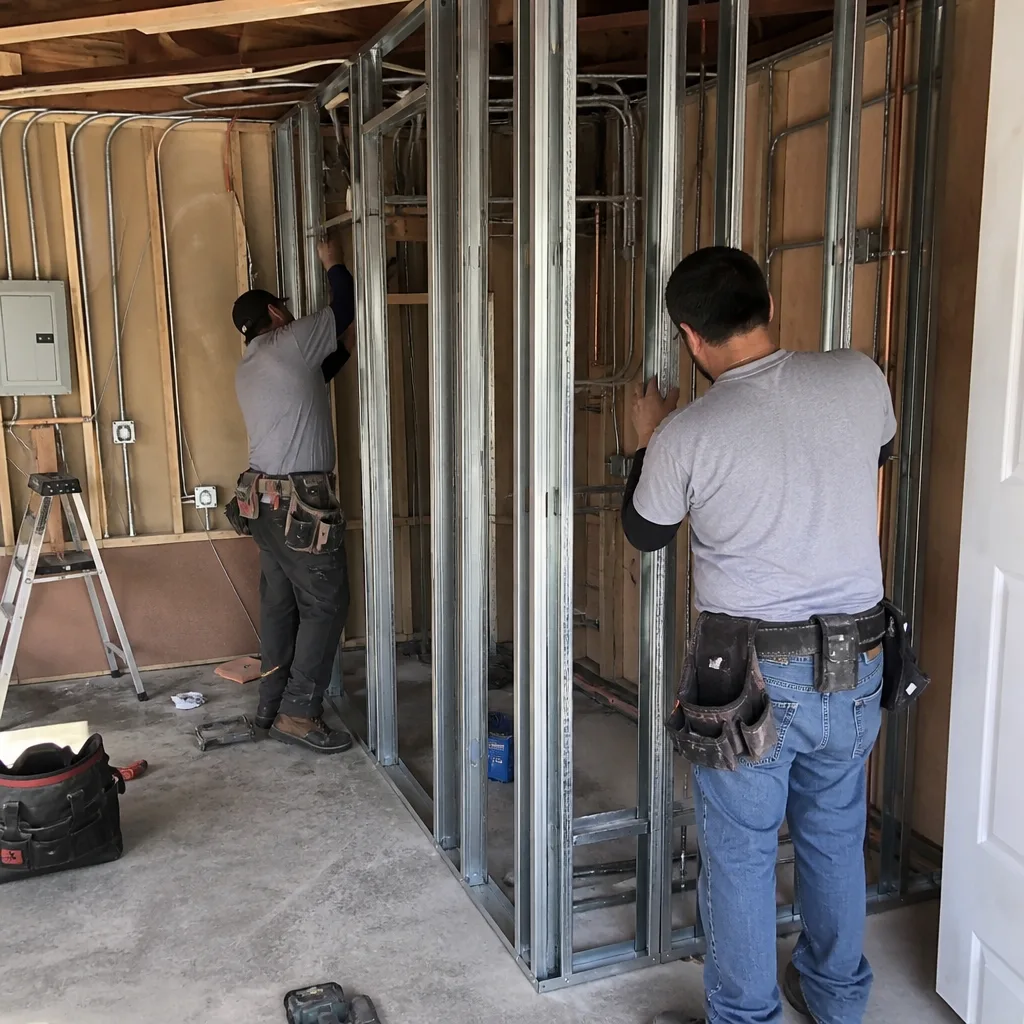

Fast, Reliable Garage Conversion Contractor Across Koreatown
Most garage conversions in Koreatown are not actually garage conversions. They are carport and storage-room conversions on multi-family lots, often attached to 1920s bungalow courts or post-war apartment buildings that are already at or near maximum lot coverage. The work is different here than in a single-family neighborhood, and it rewards a contractor who has read the local permit files before they ever pick up a tool. Our Garage Conversion Contractor team starts every Koreatown estimate by pulling the existing building records through the LA building portal, because what is already on file often changes the whole design. If you need a straight answer about your lot, your building, and what a conversion will actually cost, call us at (707) 383-5338 and ask for Ben.
Why Seedling ADU Builders Is Koreatown’s Preferred Garage Conversion Contractor Company
Koreatown is our kind of territory. The parcels here are overwhelmingly zoned R3 or R4 and already developed as bungalow courts, duplexes, and 1950s-to-1970s apartment buildings, not the single-family lots that most ADU marketing assumes. A contractor who has never worked this density will bid a suburban garage flip and then stall when the structural drawings show a shear wall exactly where the new door needs to go. We know to look for that before we bid, not after.
Every Koreatown project we take on gets a written price before any work starts. That price includes line-item allowances for the things this housing stock regularly hides: outdated 60-to-100-amp electrical services, galvanized plumbing, and framing that was notched decades ago by someone running pipe through the wrong stud. Background-checked, uniformed technicians do the work, and families with kids and pets know exactly who is walking through the door. When walls open and we find something the original bid did not cover, the owner sees the number and approves it in writing before we touch anything else. Ben Ortega leads every Koreatown scope-of-work and walks the site personally. Call (707) 383-5338 and you will get a live person, not a voicemail tree.
Garage to Bedroom Conversion in Koreatown
A Garage to Bedroom Conversion in Koreatown usually means taking an attached or semi-attached non-habitable space, often a former carport storage room off a 1920s bungalow court or a 1960s apartment building, and turning it into a legal bedroom with its own egress, insulation, electrical circuit, and climate control. The cost in Koreatown typically runs $85,000 to $145,000 when the space is attached to an existing dwelling and the building’s panel can handle the added load without an electrical service upgrade. When the panel cannot, plan for the service upgrade as a separate allowance, commonly $4,000 to $8,000 depending on what the utility requires.
The single biggest difference between Koreatown and a single-family neighborhood is lot coverage. Many of these buildings are already built out to their legal limit, which is why the bedroom conversion happens inside the existing footprint rather than as a new structure. That is good news for permitting in some ways, but it also means the work shares walls, floors, and utility runs with occupied units, so the crew needs to be careful about noise, dust control, and scheduling around families already living there.
What the job actually involves
We pull the existing floor plan and retrofit permits from the LA building portal first. Then we open a small inspection access in the wall or ceiling to see what is behind it before we finalize the number. That inspection step is what keeps the quote honest.
Because Koreatown sits in one of the densest neighborhoods outside Manhattan, the heat island effect is real. A converted bedroom without proper cooling will be miserable from June through October. We spec ductless mini-splits with dedicated circuits on these conversions rather than trying to force ducted air through a building that was never designed for it.
Permits and code triggers
A bedroom conversion triggers electrical, egress, ventilation, and smoke/CO requirements. Older Koreatown buildings frequently have galvanized plumbing that has to go once the walls are open. We write those upgrades into the contract as pre-priced allowances, so the final number moves only if the scope actually changes, and only with written approval.
Garage Conversion ADU in Koreatown
A Garage Conversion ADU in Koreatown is the path to a permitted rental unit or an in-law suite when the lot has no room to build out. On Koreatown’s R3 and R4 parcels, this often means converting a carport or a ground-floor storage room into a studio or one-bedroom unit, frequently in a building that already has soft-story retrofit permits on file under LA Ordinance 183893. The cost for a conversion ADU here typically runs $130,000 to $200,000, with the higher end covering electrical service upgrades, structural work, and the kind of sound isolation that multi-family living requires.
The advantage Kangnam-style density gives Koreatown owners is that California’s 2020 ADU law reforms explicitly opened ADUs on multi-family parcels. Nearly every lot here qualifies in some form. The catch is that those same lots are compact, max-coverage parcels with older buildings. The ADU has to fit inside what already exists, and it has to be sequenced around structural retrofit work that may already be documented with the city.
How we scope a conversion ADU here
Before we bid, we check whether the building has structural drawings on file from a soft-story retrofit. If those drawings exist, they tell us where shear walls, hold-downs, and moment frames already sit. A new door or header cannot land on top of one. Knowing that before the bid keeps the design legal and the price real.
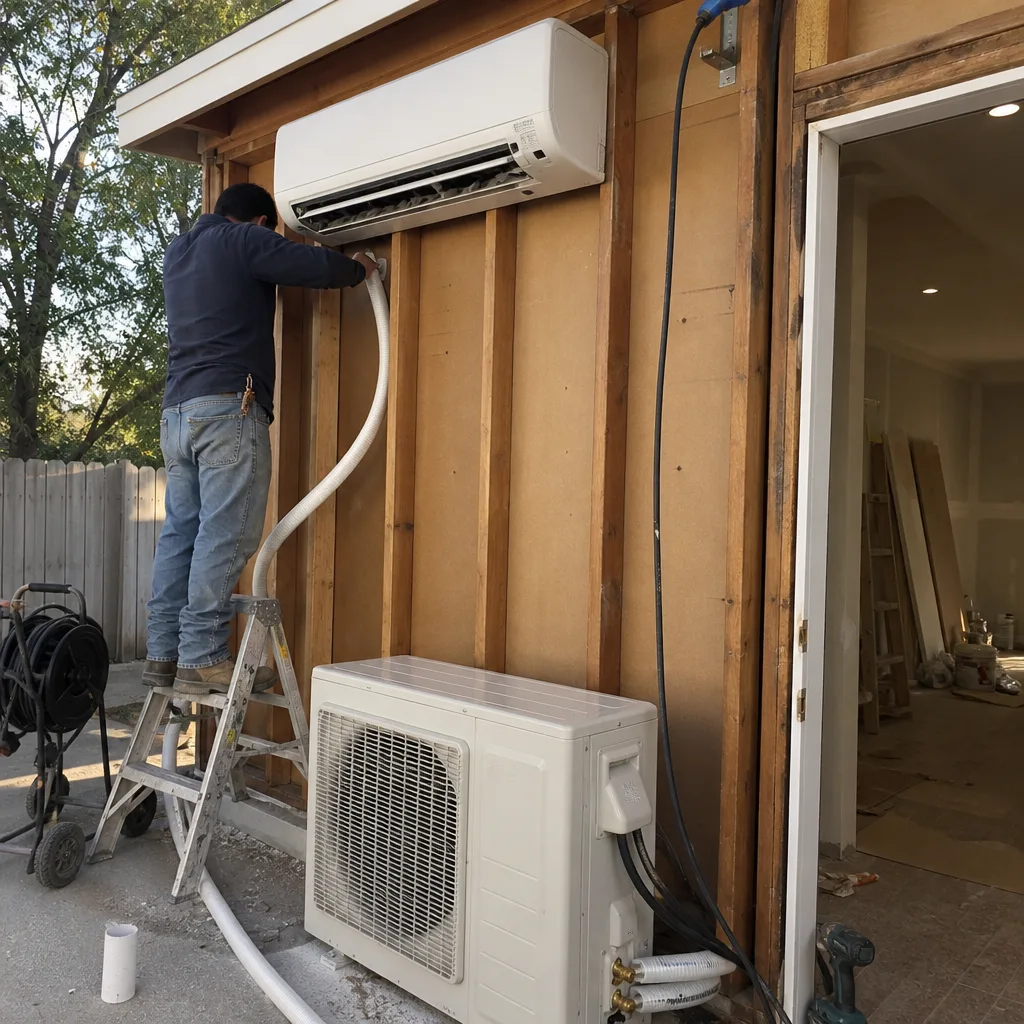
We then open a small inspection access to check the panel, the plumbing, and the condition of the framing. On a 1928 Spanish Colonial Revival fourplex near Normandie and 8th, our crew opened a storage room off the carport to convert it to a studio ADU and found cloth-wrapped knob-and-tube wiring, a 60-amp panel, and framing that had been notched for a previous plumbing reroute. We wrote the electrical service upgrade, the sistered studs, and a ductless mini-split with its own 240V circuit into the contract as line-item allowances before demo. The owner saw the number and approved it in writing before we cut anything else. That unit is now a permitted studio with James Hardie siding matched to the original stucco profile.
Rental-ready, not just finished
A Koreatown ADU built to rent needs sound separation, its own address, its own panel feeder, and its own meter if the owner wants to bill utilities separately. We spec for all of that from the start, even if the owner only plans to house family. Retrofitting a meter or a firewall after final is far more expensive than planning it in.
Trusted Brands We Service in Koreatown
We work hands-on with the brands serious ADU buyers research before calling anyone: Cover, Dvele, and Boxabl among them. Because we stock common parts and materials for the Koreatown market locally, we are not waiting on a distribution center across county lines when a panel or a mini-split line set is needed mid-project. If you already have a brand preference, or if you want a straight comparison between a prefab path and a stick-built conversion on your specific Koreatown lot, call (707) 383-5338 and Ben will walk you through it.
Common Garage Conversion Contractor Problems We See in Koreatown Homes
- Shear walls from soft-story retrofits blocking new openings. Buildings that completed Ordinance 183893 work have structural drawings on file that show exactly where the lateral system sits. Put a new door or window through one of those walls and you have a very expensive problem. We pull those permits before we bid.
- 60-to-100-amp electrical panels that cannot carry an ADU. Koreatown’s older buildings were wired for the loads of the 1960s, not a studio with a mini-split, kitchenette, and laundry. Upgrading to 200 amps often requires utility coordination and a new feeder, which is why it belongs in the contract as an allowance, not as a surprise.
- Galvanized supply lines failing once the water is turned back on. Galvanized pipe corrodes from the inside out. When a conversion changes the water pressure dynamics, old joints fail. We price replacement allowances in the areas we know we will open.
- Ducted HVAC spec’d for a space with no ducts and a hotter microclimate. Koreatown’s density creates a measurable heat island effect. Title 24 models do not always capture that. Converted interior spaces with no existing duct runs need ductless mini-splits with dedicated circuits. We spec those from the first drawing.
Pricing for Garage Conversion Contractor in Koreatown, CA
Here are honest ranges for Koreatown’s market. A garage-to-bedroom conversion typically runs $85,000 to $145,000. A garage or carport conversion ADU runs $130,000 to $200,000. An electrical service upgrade from 60 or 100 amps to 200 amps adds roughly $4,000 to $8,000. A ductless mini-split system with dedicated circuits for a studio-scale space adds $6,000 to $12,000 depending on how many heads the space needs. Structural repairs, sistered studs, and shear-wall accommodations vary too widely to quote without seeing the building, which is exactly why we inspect before we bid. Every Koreatown project gets a written price before any work begins, and every completed job is covered by the 365-Day Done Right Promise. If it is not done right, we make it right. Call (707) 383-5338 to schedule a free estimate.
We Also Serve Cities Near Koreatown
Our Koreatown crews regularly work the surrounding area too. From Koreatown proper, we serve clients in Los Angeles, Long Beach, Anaheim, and Riverside, with dispatch and scheduling coordinated from our Los Angeles office. If your property sits just outside Koreatown, call (707) 383-5338 and ask whether we cover your street.
Serving Koreatown, CA - Our Local Coverage Area
We’re based in the Koreatown area and know this community well. Use the map below to see our service coverage - if you’re nearby, we can almost certainly help.
FAQs About Garage Conversion Contractor in Koreatown
Koreatown’s parcels are overwhelmingly zoned R3 or R4 and already built out as multi-family, which means the conversion usually shares walls, utility runs, and structural systems with occupied units, and the lot itself often has no room to expand. Many of these buildings have soft-story retrofit permits (Ordinance 183893) already on file, and those structural drawings can dictate where new doors and headers may or may not go. A contractor who does not check the portal before bidding will find the shear wall after the contract is signed. Call (707) 383-5338 and we will check your building’s file before we give you a number.
In our experience, the three most common finds are cloth-wrapped knob-and-tube wiring, 60-to-100-amp panels that cannot carry modern loads, and galvanized supply lines that have been corroding from the inside for decades. We sometimes also find framing that was notched years ago during a plumbing reroute and never repaired. That is why we open a small inspection access before we finalize a bid, and why our contracts include written allowances for these upgrades rather than leaving them to become surprises. For an exact scope on your building, call (707) 383-5338 to schedule a free estimate.
We price them as line-item allowances before demo, so the owner sees the number and approves it in writing before we touch anything else. That includes electrical service upgrades, plumbing replacement, structural repairs, and the ventilation and egress work the permit requires. The 365-Day Done Right Promise covers the finished job in writing, and the Cedarwell Care Promise covers how we treat the inside of your home while the work happens: shoe covers, drop cloths, pet-safe products where there is a choice, and a photo of the clean-up before the crew leaves. Call (707) 383-5338 to talk through your permit path.
Yes. That is standard practice for us on any Koreatown multi-family property. If the building went through the mandatory soft-story retrofit under Ordinance 183893, the LA building portal will have structural drawings, calculations, and permit records. Those documents tell us where the lateral system sits and what the new conversion has to work around. It saves real money to know this before the design is set. Ask Ben to pull your building’s file when you call (707) 383-5338.
Because Koreatown’s extreme density creates a heat island effect that makes interior converted spaces run hotter than standard Title 24 models predict, and because most of these buildings have no existing duct runs to tap into. A ductless mini-split with a dedicated circuit handles the cooling load without tearing through walls, and it keeps the new unit’s energy use off the main dwelling’s circuit. It is the right tool for this housing stock. Call (707) 383-5338 to get an exact price for your conversion.
Written by Ben Ortega, Owner at Seedling ADU Builders, serving Koreatown with inspection-first scoping, written pricing, and the 365-Day Done Right Promise.