

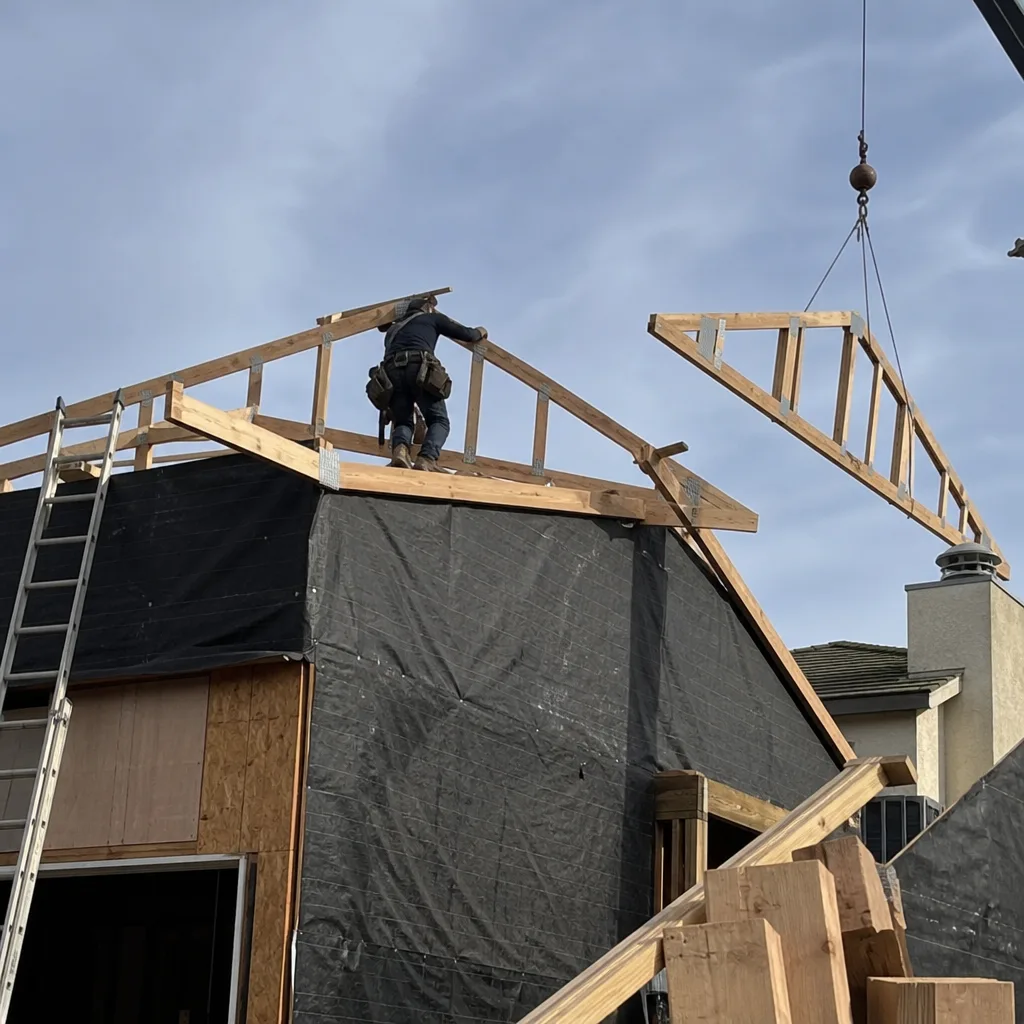
Fast, Reliable Home Addition Contractor Across Temescal Valley
A home addition in Temescal Valley typically runs $180 – $420 per square foot depending on the scope, with bedroom additions starting around $85,000 and sunroom additions running $45,000 – $95,000. Before a single tool leaves the truck, every Seedling ADU Builders project receives a written price covering materials, labor, permits, and the county and HOA review process specific to this valley. Call (707) 383-5338 to schedule a free, no-obligation estimate with Ben Ortega and our Temescal Valley team.
We work throughout unincorporated Riverside County here, from Sycamore Creek to Trilogy at Glen Ivy to Eagle Glen, and we know what the HOA architectural committees in each community will ask for before we ever submit drawings. That local knowledge saves Temescal Valley families weeks of back-and-forth and thousands in re-work. Whether you’re adding a bedroom for a growing family, a sunroom off the kitchen, or a detached ADU on a compact tract lot, we scope the full job before you commit.
Why Seedling ADU Builders Is Temescal Valley’s Preferred Home Addition Contractor Company
Temescal Valley homeowners call us because we plan for the things other Home Addition Contractor teams miss. The dual Riverside County Building & Safety and HOA review path here is not a formality. It’s a gauntlet that can reject a framed structure over a stucco color code or tile profile mismatch, and we’ve learned exactly how to avoid that. Our crew shows up to every job in Temescal Valley with background-checked, uniformed technicians who introduce themselves, cover floors with drop cloths, put on shoe covers, and use pet-safe products where there’s a choice. Before the crew leaves each day, you get a photo of the clean-up.
Ben Ortega leads every Temescal Valley project personally, from the initial site walk through final inspection. Homeowners in Sycamore Creek and Eagle Glen consistently tell us the same thing: they knew what the bill would be before work started, and they knew who was walking through their door every morning. That’s the Cedarwell Care Promise at work, and it’s written into every contract. Live people answer our phones around the clock during a build, not a voicemail tree. If something needs attention at 9 p.m. on a Tuesday, a real person picks up.
Key Takeaways for Temescal Valley Homeowners
- Written pricing before work starts on every bedroom addition, sunroom addition, and detached ADU. No surprise line items added after the crew arrives.
- Dual county and HOA review is the norm here. Temescal Valley is unincorporated Riverside County, and most communities require HOA architectural committee approval before you can even order exterior materials.
- Summer heat drives HVAC sizing. Detached structures need independently sized systems built for 105 – 112°F valley heat, not standard manual-J assumptions.
- Compact lots mean the county setback envelope rules the footprint. We check this before we quote, so the price reflects what can actually be built.
- Every completed job is covered by the 365-Day Done Right Promise. If it’s not done right, we make it right, in writing.
Bedroom Addition Contractor in Temescal Valley
A Bedroom Addition Contractor in Temescal Valley sizes the new room to your lot’s setback envelope first, then designs around your home’s existing slab, stucco, and roofline so the addition looks like it grew there. Families here typically add a bedroom when a second child arrives, an aging parent moves in, or a home office becomes a permanent need. Expect $85,000 – $140,000 for a code-compliant bedroom addition in this market, with a bathroom attached pushing toward the upper end. Every quote we write includes Riverside County permit fees, any HOA architectural submittal costs, and the exact materials list.
Matching stucco and roof profile
In Temescal Valley, “matching the house” is not a style preference. It’s often a legal requirement written into the CC&Rs. The HOA architectural review committee in Sycamore Creek or Eagle Glen can mandate the same stucco color code and concrete tile profile as your primary residence. We pull those specs from the committee’s records before we order a single board or bag of stucco.
Slab-on-grade considerations
Most Temescal Valley tract homes sit on concrete slabs. Adding a bedroom means extending that slab, and in this valley’s heat-sink climate, we pay close attention to radiant heat management in the floor system. A bedroom floor that bakes all day and radiates heat at night is a comfort problem and an energy bill problem you’ll feel for years.
Sunroom Addition in Temescal Valley
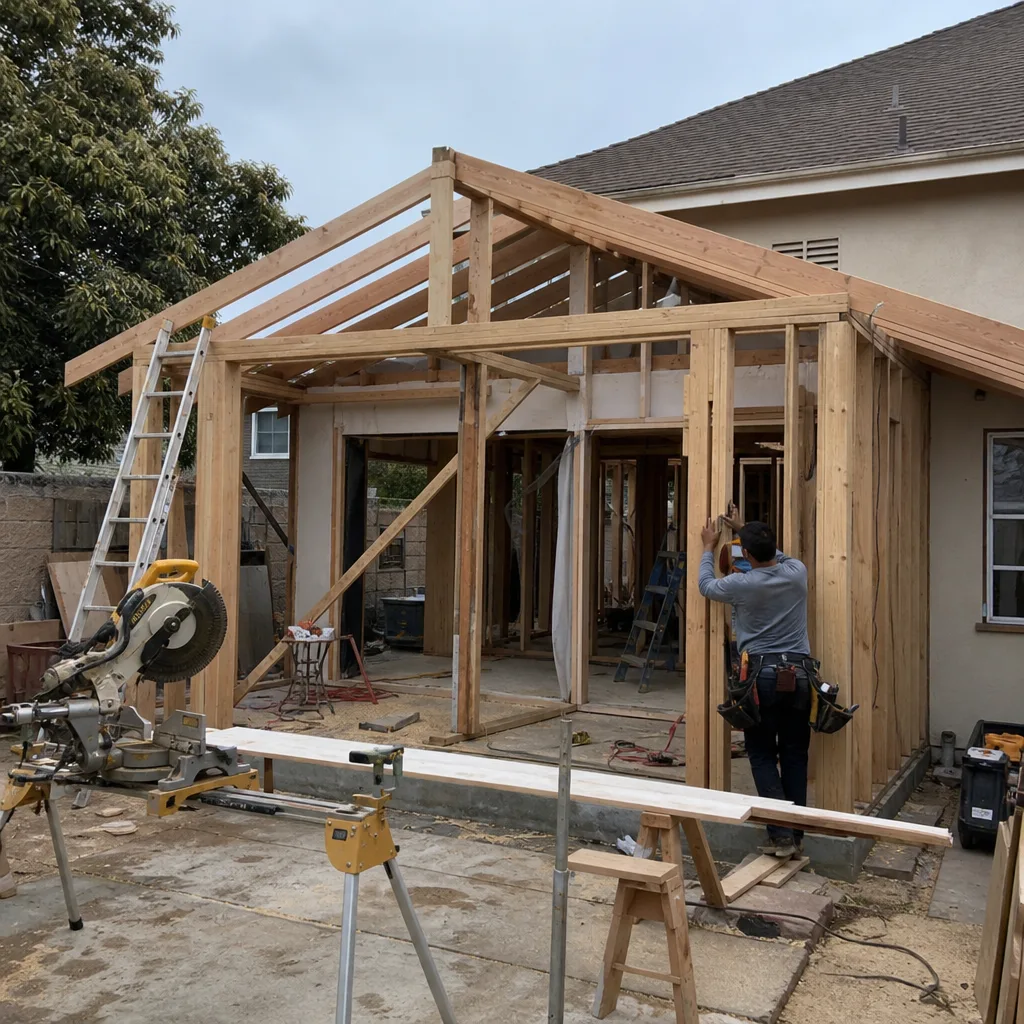
A Sunroom Addition in Temescal Valley runs $45,000 – $95,000 depending on the glazing package, foundation work, and whether you’re adding HVAC. Homeowners here use sunrooms as morning coffee rooms, kids’ play spaces, and light-filled home offices. Because the valley’s enclosed geography traps heat, we strongly recommend insulated low-E glazing and an independently sized mini-split system. A sunroom without those will be unusable from June through September in this climate.
Foundation options on compact lots
Most Temescal Valley sunrooms go on a shallow concrete slab or a pier-and-beam foundation, depending on the grade and the size of the yard. On compact tract lots, we check the county setback envelope first. A sunroom that pushes past the setback line is not just a permit denial. It can require design changes that shrink the usable room.
HVAC sizing for the heat sink
The 105 – 112°F summer highs here are not a challenge you solve with a window unit. We size each sunroom’s cooling load based on the actual solar exposure of the glazing, not a generic square-foot formula. Get this wrong and the room becomes a greenhouse by 2 p.m., every day, all summer.
Trusted Brands We Service in Temescal Valley
Seedling ADU Builders in Temescal Valley gives homeowners hands-on access to the brands serious buyers research before calling anyone. For detached ADUs and prefab additions, we work directly with Abodu, Cover, and Dvele to configure the right unit for your lot size, setback envelope, and HOA requirements. We also install Mighty Buildings panelized systems where the foundation and design benefit from factory precision. Our team handles the full install and finish, and we carry the job through county inspection and HOA final sign-off. You choose the product that fits your lot and your budget, not just what a builder prefers to sell.
Common Home Addition Contractor Problems We See in Temescal Valley Homes
- HOA rejection after framing. In Sycamore Creek, our crew framed and roofed a detached ADU using a standard concrete tile profile, then the HOA architectural committee rejected it because the CC&Rs required the primary residence’s exact tile profile and stucco color code. We pulled the approved color and profile from the committee’s records, re-ordered matching material, and re-submitted. We now verify HOA architectural submittals before ordering any exterior finishes.
- Undersized HVAC for valley heat. Using a standard online manual-J calculation for a detached ADU in this 105 – 112°F heat sink leaves the unit unable to hold temperature. Equipment manufacturers can void warranties when the system runs over capacity all summer. We size every system to the actual thermal load of the structure and the orientation of the lot.
- Footprints that violate Riverside County setbacks. Detached ADUs on compact tract lots in Temescal Valley’s planned communities often need to shrink once the setback envelope is mapped. Planning the pad without that step means paying for a redesign, or worse, a foundation that already got poured too close to the line.
- Floor radiant heat on slab additions. Slab-on-grade construction is the standard in this valley’s tract housing, and that thermal mass absorbs summer heat all day. Without proper floor insulation and radiant heat planning, a new bedroom or sunroom becomes an oven that keeps radiating after sunset.
Pricing for Home Addition Contractor in Temescal Valley, CA
A home addition in Temescal Valley costs more than the same square footage in neighboring incorporated Corona, and there’s a reason: dual approvals. You’re paying for Riverside County Building & Safety permits plus HOA architectural review submittals, and your exterior materials must match the primary home’s stucco color code and concrete tile profile, often down to the manufacturer. That adds material cost and timeline. Bedroom additions here run $85,000 – $140,000. Sunroom additions run $45,000 – $95,000. Detached ADUs on compact lots run $150,000 – $280,000 depending on the brand and foundation type. Call (707) 383-5338 for a free written estimate from Ben Ortega and our Temescal Valley team. We’ll walk the lot, map the setback envelope, check your HOA’s CC&Rs, and put the full price in writing before you commit to anything.
We Also Serve Cities Near Temescal Valley
While Temescal Valley is our local focus, our crews also serve families in Home Addition Contractor in Temescal Valley and the surrounding metros, including Los Angeles, Long Beach, Anaheim, and Riverside. Scheduling is coordinated from our Los Angeles office, and our local Temescal Valley team handles every site visit and build from first walk-through to final inspection.
Serving Temescal Valley, CA - Our Local Coverage Area
We’re based in the Temescal Valley area and know this community well. Use the map below to see our service coverage - if you’re nearby, we can almost certainly help.
FAQs About Home Addition Contractor in Temescal Valley
Yes, you can build an ADU, but the HOA architectural review committee will require the new structure to use the exact same stucco color code and concrete tile profile as your primary residence. That is common in Sycamore Creek CC&Rs. We pull the approved specs from the committee’s records before ordering exterior finishes, so there’s no tear-off and re-order after framing. Call (707) 383-5338 and we’ll review your community’s requirements with you.
Yes. A detached ADU in this valley’s 105 – 112°F summer heat sink needs an independently sized HVAC system. It cannot simply tie into the main house’s system effectively, and undersized units fail to hold temperature and can void equipment warranties. We size every system to the structure’s actual thermal load and the lot’s solar exposure.
The county’s setback requirements define exactly how far any structure must sit from lot lines, and on compact tract lots in Temescal Valley that can shrink a detached ADU’s footprint by 20 to 30 percent compared to what homeowners expect. We map the envelope before we quote, so the price reflects what’s actually buildable, not what looked right on paper.
Start with a site visit to map your lot, then check your HOA’s architectural guidelines before submitting to Riverside County. The county permit will not flag a stucco color mismatch or wrong tile profile, but the HOA committee will. We handle both paths in the right sequence so one approval doesn’t invalidate the other. Call (707) 383-5338 to get that sequence started.
Yes, but the slab needs proper insulation and radiant heat planning. The thermal mass of a slab-on-grade in this climate absorbs daytime heat and radiates it into the living space after sunset. We specify above-minimum insulation and floor systems designed for the valley’s heat profile so the ADU stays livable through summer.
Written by Ben Ortega, Owner at Seedling ADU Builders, serving Temescal Valley and the surrounding Riverside County communities.