

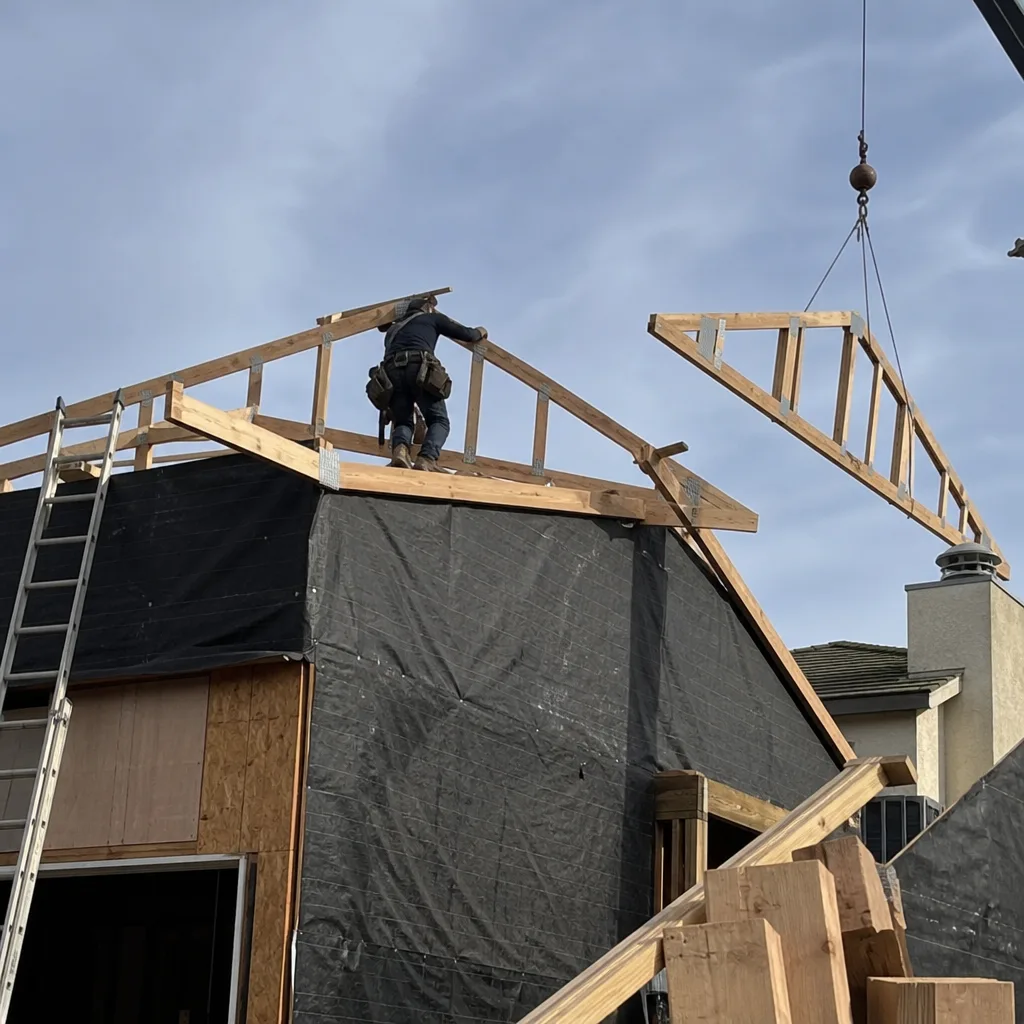
Fast, Reliable Home Addition Contractor Across Whittier
A home addition in Whittier runs $180 – $420 per square foot for most projects, with a typical 400 sq ft room addition landing between $72,000 and $168,000 before finishes. The number that actually matters in this city isn’t the square footage, it’s whether your lot sits inside the Whittier Fault Alquist-Priolo Earthquake Fault Zone, because that one map check changes your permit timeline by 6 – 10 weeks and your pre-construction budget by $3,000 – $6,000. Our Home Addition Contractor team pulls that zone map before quoting anything, so you’re not surprised later. If you’re planning a room addition, second story, sunroom, or garage conversion in Whittier, call (707) 383-5338 and we’ll walk you through what your specific lot actually requires.
Why Seedling ADU Builders Is Whittier’s Preferred Home Addition Contractor Company
We work the Uptown and central Whittier blocks where 1920s – 1940s Craftsman bungalows and Spanish Revival homes sit shoulder-to-shoulder on 6,000 – 7,500 sq ft lots, most with that detached single-car garage off the rear alley. Those garages are the cleanest conversion candidates in the city, but they’re also eighty to a hundred years old, and the hardware tells you exactly what the marine air has been doing to them for decades. We’ve replaced rusted 1930s door hinges, gate hardware, and alley fence posts on more than a few Greenleaf Avenue-adjacent jobs, and we spec materials that don’t repeat that failure.
Every Whittier job gets a written price before any work starts. No line items added after the crew shows up. Ben Ortega runs each project personally, and the whole crew, background-checked and uniformed, follows the Cedarwell Care Promise: shoe covers and drop cloths on every trip inside, pet-safe products where there’s a choice, a photo of the clean-up before we leave, and a live person answering the phone 24/7 if you call mid-build.
We’re not the cheapest bid in Whittier, and that’s on purpose. We’re the bid that doesn’t corrode, doesn’t stall at permit intake, and doesn’t leave your family living around a half-finished addition longer than necessary.
Sunroom Addition in Whittier
A sunroom addition in Whittier runs $120,000 – $210,000 for a 300 – 500 sq ft four-season room with a dedicated ductless mini-split, double-pane low-E glazing, and a properly flashed transition to the existing roofline. Whittier’s position at the inland base of the Puente Hills means summer highs hit 95 – 100°F regularly, so the glass package and the cooling load calculation are the two decisions that determine whether the room is livable in August or abandoned until October.
Sunrooms here follow the same Whittier Fault zone rules as any habitable addition: if the lot sits within or adjacent to the fault trace, the City requires a site-specific geotechnical investigation and fault-rupture hazard report before it will accept the permit application. We check zone maps on every quote, not just the ones that look risky from the street.
What We Specify in Whittier’s Heat Pocket
Glass matters more than square footage in this climate. We recommend low-E coatings tuned for western and southern exposure, operable windows on at least two walls for cross-ventilation, and a mini-split sized for the room’s solar gain, not just its floor area. Most Whittier homeowners want the room useable through the summer, which means the HVAC spec can’t be an afterthought.
Foundation and Fault-Zone Reality
Sunrooms on slab-on-grade lots in East and South Whittier are straightforward if the panel can carry the load. Older central Whittier lots with raised foundations require a structural tie-in and, near the fault trace, a geologist’s signature before the City glances at the drawings. We handle both, and we tell you what your lot needs before you’re committed to the design.
Room Addition Contractor in Whittier
A room addition in Whittier for a growing family typically ranges $90,000 – $220,000 depending on whether it’s a single bedroom bump-out or a full primary suite with a new bathroom, and the spread isn’t about finishes as much as it’s about what the lot and the panel will allow. As a Room Addition Contractor working the city regularly, our team starts with the items that kill Whittier projects: the fault-zone map, the existing electrical service, and the condition of the sill plate where the new framing ties in.
Central and Uptown Whittier homes built before 1940 rarely have a modern 200-amp panel, and the 60 – 100 amp services we find in East and South Whittier tract homes from the 1950s and 1960s usually can’t carry a ductless mini-split plus new living space. That upgrade gets priced into the written quote up front, not discovered at rough-in.
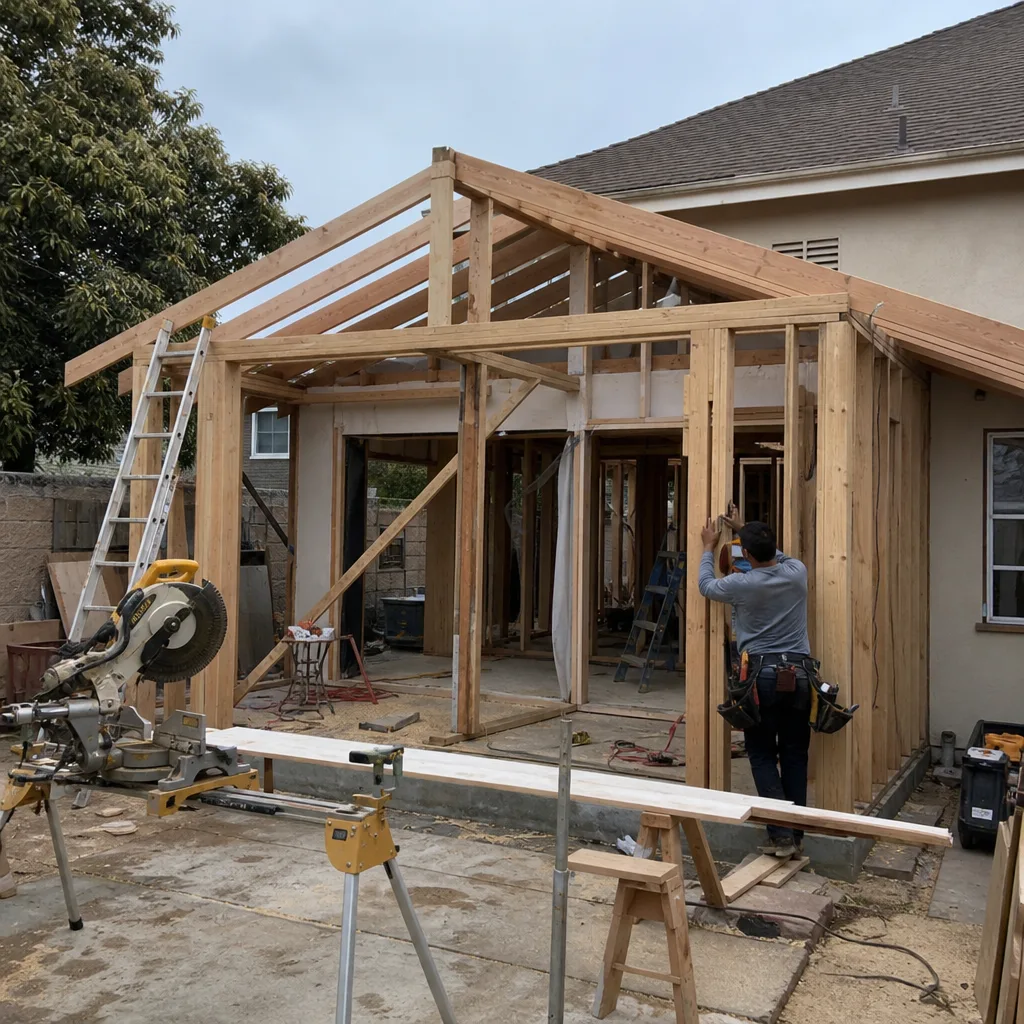
Adding Space to a 1920s Bungalow
Bungalow additions work when the transition respects the original roofline and the foundation. We tie new framing into the existing structure with hot-dip galvanized connectors and stainless structural screws, because Whittier’s marine-layer moisture, riding in on morning air from the coast, rusts plain steel brackets faster than most homeowners expect. The coastal-spec hardware costs a few hundred dollars more on a typical addition. The inland spec costs thousands when it fails inside a decade.
Second Story Additions on Small Lots
For Whittier lots where the only direction is up, a second story addition runs $220,000 – $420,000, and the existing foundation almost always needs a structural review before the City will accept the drawings. Homes in the fault zone may require additional engineering. We coordinate the geotech, the structural engineer, and the permit package so the homeowner isn’t chasing three separate vendors.
Trusted Brands We Service in Whittier
We work with the product lines Whittier homeowners research before calling anyone: James Hardie siding and trim for the additions that need to stand up to Whittier’s heat and morning marine air, Abodu and Cover for prefab ADUs where a factory-built shell beats a long onsite build, and Dvele for high-performance modular construction. We don’t push one brand over another. We’ll show you what each product costs, how long it takes, and what it looks like on a Whittier lot, then you decide. Parts and material lead times are handled by our team, so you’re not calling suppliers yourself.
Common Home Addition Contractor Problems We See in Whittier Homes
- Rusted pre-1940 garage hardware and sill plates. The marine-layer moisture that rolls through the Puente Hills every morning eats plain steel brackets and door hardware within a decade. On central Whittier garage-conversion additions, we’ve pulled rusted-through hinges and wicking redwood sills that required full replacement before new framing could begin.
- Permit applications rejected because the fault-zone report is missing. Whittier sits inside an officially designated Alquist-Priolo Earthquake Fault Zone, and lots near the fault trace, including blocks off Greenleaf Avenue, need a geotechnical report before the City will accept the permit package. Skipping that check costs 6 – 10 weeks and $3,000 – $6,000 mid-project.
- Undersized panels in East and South Whittier slab tract homes. A 60 – 100 amp service can’t carry a ductless mini-split plus new living space. We see this on nearly every tract-home addition, and we price the panel upgrade into the written quote so rough-in doesn’t stall waiting for Southern California Edison.
- Inland-spec materials on a coastal-influenced job. Cheaper bids price painted fasteners, plain steel framing connectors, and non-stainless hardware. In Whittier’s moisture pocket, those fail first. The upgrade to hot-dip galvanized and stainless is the cheaper call within ten years.
Pricing for Home Addition Contractor in Whittier, CA
A modest bump-out addition in Whittier starts around $60,000 – $90,000. A full primary bedroom suite with a bath runs $150,000 – $280,000. Sunrooms land at $120,000 – $210,000. Second stories run $220,000 – $420,000. The Whittier-specific variables that move these numbers are the fault-zone geotech report ($3,000 – $6,000 when required), the panel upgrade ($3,500 – $8,000 on older homes), and the coastal-spec materials package (a few hundred dollars on small jobs, $2,000 – $4,000 on larger additions). Every one of these is in the written price before we start. Call (707) 383-5338 and we’ll give you a real number for your lot and your scope, not a vague range. Estimates are free.
We Also Serve Cities Near Whittier
Our crews serve Whittier and the surrounding communities daily, including Pico Rivera, South El Monte, Hacienda Heights, and Montebello. If you’re just outside the city line, the same written-pricing promise and Cedarwell Care Promise apply.
Serving Whittier, CA - Our Local Coverage Area
We’re based in the Whittier area and know this community well. Use the map below to see our service coverage - if you’re nearby, we can almost certainly help.
FAQs About Home Addition Contractor in Whittier
Yes, if your lot falls within or adjacent to the Whittier Fault Alquist-Priolo Earthquake Fault Zone, the City of Whittier will not accept your permit application without a site-specific geotechnical investigation and fault-rupture hazard report from a licensed geologist. That includes many lots near the fault trace crossing the hills above Greenleaf Avenue and adjacent blocks. We pull the zone map on every quote, so you’ll know before you spend a dollar on design. Call (707) 383-5338 and ask us to check your address.
Because Whittier’s marine-influenced morning air corrodes plain steel framing hardware, painted fasteners, and non-stainless hinges years earlier than the same materials fail inland. The coastal-spec version uses hot-dip galvanized connectors, stainless structural screws, marine-grade aluminum window frames, and sealed paver joints, and it costs a few hundred to a few thousand dollars more up front. The inland-spec version is cheaper today and costs more within a decade when the hardware rusts and the sill plates wick. We price the coastal spec as our standard, and we’ll show you the difference line by line before you choose.
Only if it’s a modern 200-amp service. East and South Whittier tract homes from the 1950s and 1960s usually have 60 – 100 amp panels that can’t carry a mini-split plus new living space, and central Whittier bungalows are often in the same situation. The fix is a full service upgrade, typically $3,500 – $8,000, and it goes into your written quote before we begin, not as a discovery at rough-in. We’ll check your panel during the free estimate, then give you an exact number.
Usually yes. Uptown and central Whittier’s 1920s – 1940s Craftsman and Spanish Revival homes almost universally have a detached single-car garage off a rear alley, which is the cleanest conversion layout in the city: the structure already exists, the alley access is established, and the footprint is already within the setback. The catch is the age of the hardware and framing. We’ve replaced rusted 1930s door hardware and wicking sill plates on Greenleaf Avenue garage conversions before new framing started. If the garage is sound or you’re willing to repair the bottom plates and sheathing, the conversion is often the lowest-cost way to add a legal living space in Whittier.
Three things. First, the fault-zone geotech and fault-rupture hazard report before permit intake, because the City of Whittier requires it on lots inside the Alquist-Priolo zone and a generic builder often doesn’t check until it’s too late. Second, coastal-spec hardware: hot-dip galvanized framing connectors, stainless structural screws, marine-grade aluminum window frames, and sealed paver joints, because Whittier’s morning marine air rusts plain steel fast. Third, a dedicated ductless mini-split on essentially every addition, because Whittier’s inland heat pocket pushes summer highs to 95 – 100°F and sharing the main home’s HVAC under-loads a room the family won’t actually use. Call (707) 383-5338 for a written quote on your specific lot.
Written by Ben Ortega, Owner at Seedling ADU Builders, serving Whittier with written pricing, the 365-Day Done Right Promise, and the Cedarwell Care Promise on every addition, garage conversion, and ADU we build.