

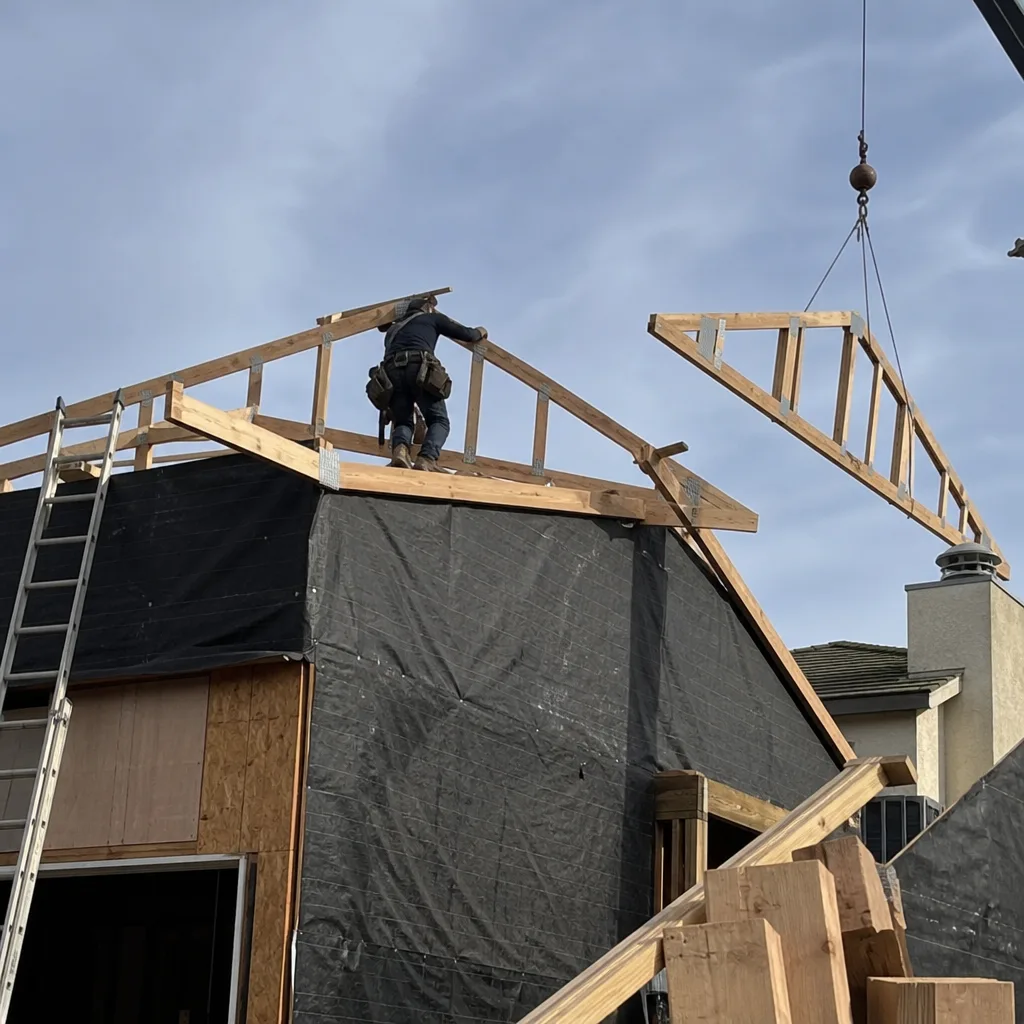
Fast, Reliable Home Addition Contractor Across Koreatown
Adding livable space to a Koreatown home usually costs $180 – $450 per square foot depending on whether you’re converting existing interior space or building new, and most jobs take three to six months from permit to final inspection. We coordinate scheduling and dispatch from our Los Angeles office, with crews that know Koreatown’s R3/R4 parcels, 1920s bungalow courts, and post-war wood-frame apartments better than anyone. Call (707) 383-5338 for a free estimate, and we’ll walk your lot with you before anyone picks up a tool.
Why Seedling ADU Builders Is Koreatown’s Preferred Home Addition Contractor Company
Koreatown isn’t Hancock Park. One mile apart, completely different building stock. Most of our work here happens inside existing buildings: storage rooms off carports, underused laundry rooms, deep closets behind 1940s lath and plaster. We know what lives behind those walls before we open them, because we’ve opened hundreds across the neighborhood, from the bungalow courts near Wilshire and Western to the fourplexes off 8th Street. That local experience means we bid accurately the first time, with written allowances for what inspection finds.
Our Koreatown customers get the full Cedarwell Care Promise on every visit: shoe covers and drop cloths inside the home, pet-safe products where there’s a choice, and a photo of the clean-up before the crew leaves. Ben Ortega leads our team, and he holds every Koreatown project to one standard: a written price before work starts, and the 365-Day Done Right Promise on everything we build. If it’s not done right, we make it right.
Crews serving Koreatown are background-checked and uniformed, so when we knock on the door of your apartment building or bungalow court, you know exactly who’s walking through. And during an active build, a live person answers our phone 24/7, not a voicemail tree.
Sunroom Addition in Koreatown
A sunroom addition in Koreatown typically runs $45,000 – $85,000 depending on whether you’re converting an existing enclosed porch or building a small new bump-out, and most owners in this neighborhood pursue it to capture light in units that currently face a neighboring building or a narrow courtyard. The densest blocks near Wilshire Boulevard leave many ground-floor units with one good window, and a properly insulated sunroom with thermal-rated glass changes how the whole unit feels.
Converting Covered Porches and Courtyard Space
Many Koreatown bungalow courts have enclosed front porches that were never properly insulated or permitted. We see these constantly. Converting one into a legal, conditioned sunroom means upgrading the electrical, adding the right Title 24 insulation envelope, and usually running a dedicated circuit for a mini-split, because these spaces rarely have duct access.
When a Sunroom Makes Sense on an R3 Lot
If your parcel is already near max lot coverage, a sunroom carved from existing porch or courtyard footprint may be the only light-filled addition you can legally build without going through a zoning variance. We’ll check your lot’s current coverage against the R3/R4 allowances before we ever order materials. That saves you from paying for drawings on a project the city will never approve.
Room Addition Contractor in Koreatown
A room addition contractor in Koreatown has to think differently than one working in Beverly Hills or Silver Lake, because the room you’re adding here almost always comes out of space that already exists: a storage room behind the carport, an oversized laundry, a dead hallway in a 1950s apartment building. Room additions in Koreatown typically run $220 – $375 per square foot for interior conversions, and $300 – $450 per square foot for new square footage with foundation work.
Storage Room and Carport Conversions
The dominant project type in this neighborhood is a storage-room or carport conversion on an existing apartment lot. You’re not adding a foundation, you’re capturing space that’s already under roof. But these spaces were never built to be habitable, so the work is real: electrical service, insulation, egress windows, and seismic strapping all have to come up to code before the city signs off.
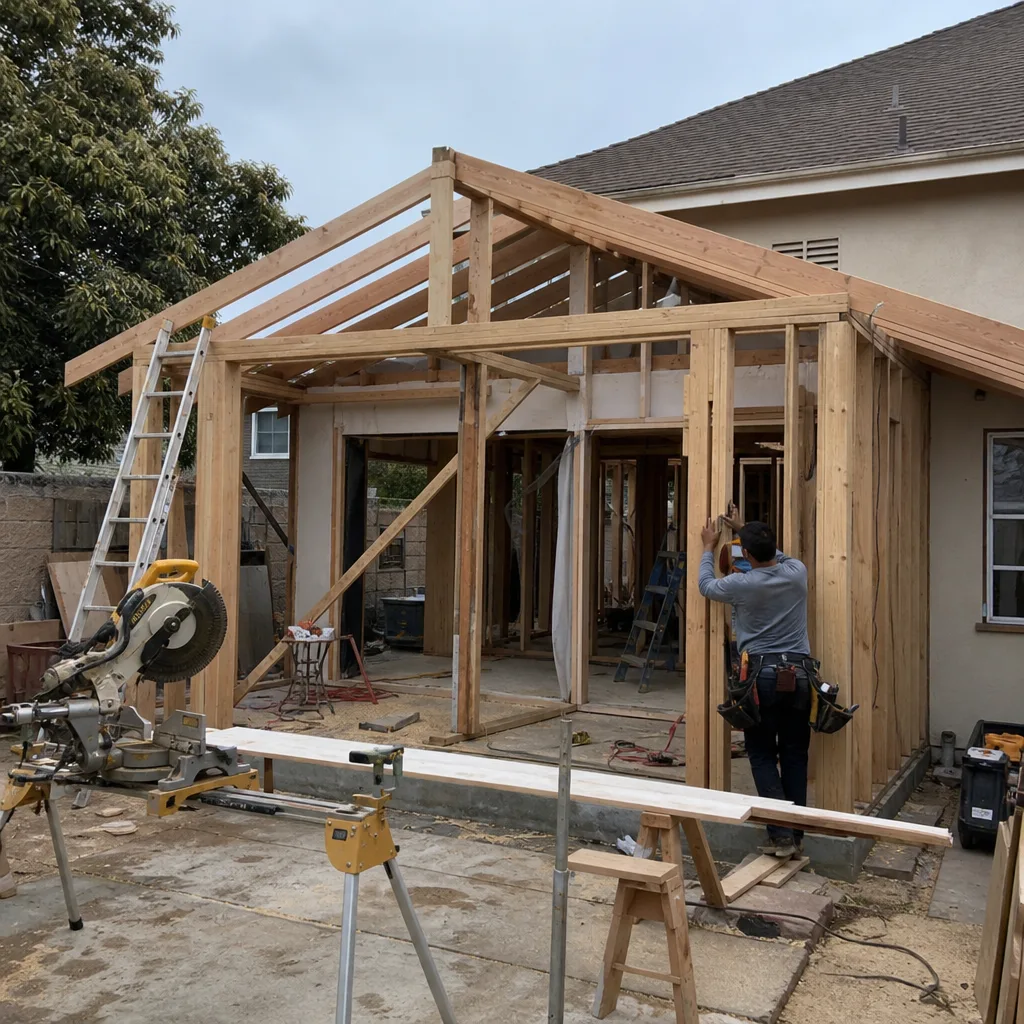
Wall-Open Surprises on Older Buildings
We write allowances into every Koreatown contract for what the walls might hold: knob-and-tube wiring, galvanized supply lines that fail pressure tests, and undersized framing that was never meant to carry a finished room. When we find it, you get a written change order with a fixed price before we proceed. You approve it, then we touch it. Nothing else.
Trusted Brands We Service in Koreatown
We work directly with the brands serious Koreatown owners research before calling anyone: James Hardie siding and trim for exterior-facing additions, Abodu and Cover for prefab ADU shells that can sometimes work on rare Koreatown lots with side-yard access, and Dvele for high-performance modular builds. When a product isn’t local, we know the wait times and the logistics to get it to a Koreatown job site without leaving materials stacked on the sidewalk for weeks. For most interior conversions we’re typically using James Hardie-compatible framing details and locally sourced lumber, so turnaround stays predictable.
Common Home Addition Contractor Problems We See in Koreatown Homes
- Knob-and-tube wiring behind lath and plaster. Koreatown’s 1920s – 1940s buildings frequently still have cloth-wrapped wiring that insulation can’t safely cover. Opening a wall for an addition usually means rewiring that section, and sometimes the whole circuit.
- 60 – 100 amp electrical panels feeding entire buildings. A 1948 fourplex near 8th and Western came to us with a 60-amp panel serving four units. Any habitable addition means a panel upgrade to 200 amps, and that’s a line item we price up front, not after demo.
- Galvanized plumbing that’s already failed or about to. We pressure-test supply lines before we close any wall. In Koreatown’s older stock, that test fails more often than it passes, and replacing supply lines while the wall is open is far cheaper than opening it twice.
- Max lot coverage killing new-construction plans. Many owners come to us wanting a detached addition and learn their R3/R4 parcel is already at or over coverage limits. The answer is almost always a conversion inside the existing footprint, and we tell you that before you spend money on drawings.
Pricing for Home Addition Contractor in Koreatown, CA
Koreatown’s market has real price floors and ceilings, and we’d rather you know them before calling. Interior conversions of existing non-habitable space run $220 – $375 per square foot. New room additions with foundation work run $300 – $450 per square foot. Sunroom additions run $45,000 – $85,000 all-in depending on glazing and whether you’re converting a porch or adding new framing. What moves numbers in this neighborhood: the age of your wiring, whether your panel needs upgrading, whether your building’s soft-story retrofit permits are already on file, and whether the space has any existing duct runs. Every Seedling estimate is a written, line-item price before work starts. Call (707) 383-5338 to schedule your free estimate, and we’ll walk your specific building with you.
We Also Serve Cities Near Koreatown
While this page focuses on Home Addition Contractor in Koreatown, our crews also serve Los Angeles, Long Beach, Anaheim, and Riverside. If you own property in a nearby city and want the same written-price approach, give us a call at (707) 383-5338.
Serving Koreatown, CA - Our Local Coverage Area
We’re based in the Koreatown area and know this community well. Use the map below to see our service coverage - if you’re nearby, we can almost certainly help.
FAQs About Home Addition Contractor in Koreatown
Because the visible room rarely tells you what’s behind it. In Koreatown’s 1920s – 1940s Spanish Colonial Revival bungalow courts and post-war wood-frame apartments, opening a wall commonly turns up knob-and-tube wiring, a 60 – 100 amp panel feeding the whole structure, and galvanized plumbing that fails a pressure test. A contractor who bids the visible room and has no allowance for these discoveries will raise the price mid-job. We write allowances into the contract before demo, so when we find something, the cost was already planned and you approve a written change order before we continue. Call (707) 383-5338 for an exact quote on your building.
Yes, and Koreatown is actually one of the best places in Los Angeles for it. California’s 2020 ADU law reforms explicitly unlocked ADUs on multi-family parcels, which means Koreatown’s R3/R4 zoning lets owners convert carports, storage rooms, and other non-habitable space into legal units. Nearly every parcel in this neighborhood qualifies, and many owners can legally stack multiple ADUs on one lot in ways that aren’t possible one mile away in single-family Hancock Park. Call (707) 383-5338 and we’ll check your parcel’s specifics before you spend anything.
Many Koreatown wood-frame apartment buildings were subject to LA’s mandatory soft-story retrofit ordinance, with a compliance deadline of 2020. That means their owners already paid for structural drawings and pull permits, and those documents are sitting on file with the LA building portal. When we pull them before bidding an addition, we can often avoid duplicating engineering work you already paid for. It also tells us the building’s structural capacity before we add load. We check this on every Koreatown apartment building we bid, before a single wall comes down.
Usually yes, but not as detached new construction. Koreatown’s compact, heavily built-out R3/R4 parcels rarely have room for a new structure. The path that actually works here is converting existing non-habitable space: storage rooms, carports, deep closets, and unused laundry areas. These conversions capture space already under roof and inside your current footprint, so they don’t push you further over coverage limits. We’ll verify your lot’s current coverage against zoning before you pay for any design work.
In most cases, yes. Koreatown has one of the highest urban densities outside Manhattan, which produces a measurable heat island effect. Thermal loads run higher than standard Title 24 models assume, and converted interior spaces almost never have existing duct runs. Ductless mini-split systems with dedicated circuits are effectively mandatory in these conversions, not optional. We spec them from the start and price the dedicated circuits into the contract, so you’re not hit with a late HVAC redesign.
Written by Ben Ortega, Owner at Seedling ADU Builders, serving Koreatown and surrounding Los Angeles communities.